
Chlorine, Bromine, and Beyond: A Swim Spa Sanitizer Solution Has Arrived
Finally, the Solution to Help Customers Keep Swim Spa Water Clean and Clear

Swim spas continue to rise in popularity year after year.1 People’s increasing focus on health and wellness, rising disposable incomes, and changing lifestyles are driving their growth.
But what comes after the sale? Repeat business! Customers look to you for ongoing help and service, which is key to your overall business success.
Your customers will probably soon discover that keeping water consistently clean and clear is not as easy as they’d like it to be, and often frustrating.
No doubt, you take time to educate new swim spa owners and set them up right, but whether they’re new swim spa owners or have had their swim spa for years, they’ll have ongoing water related issues for you:
Which is best – chlorine or bromine? What’s the right level for my sanitizer? Why does my chlorine level spike and dip? Why is my swim spa water cloudy? Why is the water irritating and smelly? How often should I test my water? Can I use pool chemicals in my swim spa? Or should I use hot tub chemicals?
And no wonder, swim spa water care is challenging. It’s a unique body of water. It’s smaller than the average swimming pool that contains 10,000 – 25,000 gallons of water, with water temperatures between 78◦F- 85◦F. And larger than the average 300 gallon hot tub with water temperatures between 99◦F – 102◦F.
Swim spas are a tweener. Their water volumes range from 1,000 – 2,500 gallons of water. And their temperatures range between 80◦F – 102◦F.
Water care is challenging because sanitizers work differently in different water volumes and temperatures.
What works well to sanitize a swimming pool won’t necessarily work well for a swim spa. And success keeping a hot tub clean won’t be the same for a swim spa.
Additionally, swim spas can be used year ‘round and climate affects the swim spa and its water. Sanitizers need to be effective in a variety of locations with climates from extreme heat to extreme cold.
Which Sanitizer do you Recommend?
Chlorine is most commonly used in swimming pools and hot tubs because it’s effective, easy to use and comparatively not expensive. Chlorine comes in different forms:
- Trichlor is widely used in swimming pools, but in general, should not be used in
swim spas because it can damage the shell or surfaces. Most swim spa
manufacturers void their warranty if trichlor is used in them. - Dichlor is usually used in hot tubs.
Dichlor
Dichlor is commonly used in hot tubs because it dissolves quickly and easily, has a stable shelf life, stores well in sealed airtight containers, and has a fairly neutral pH level.
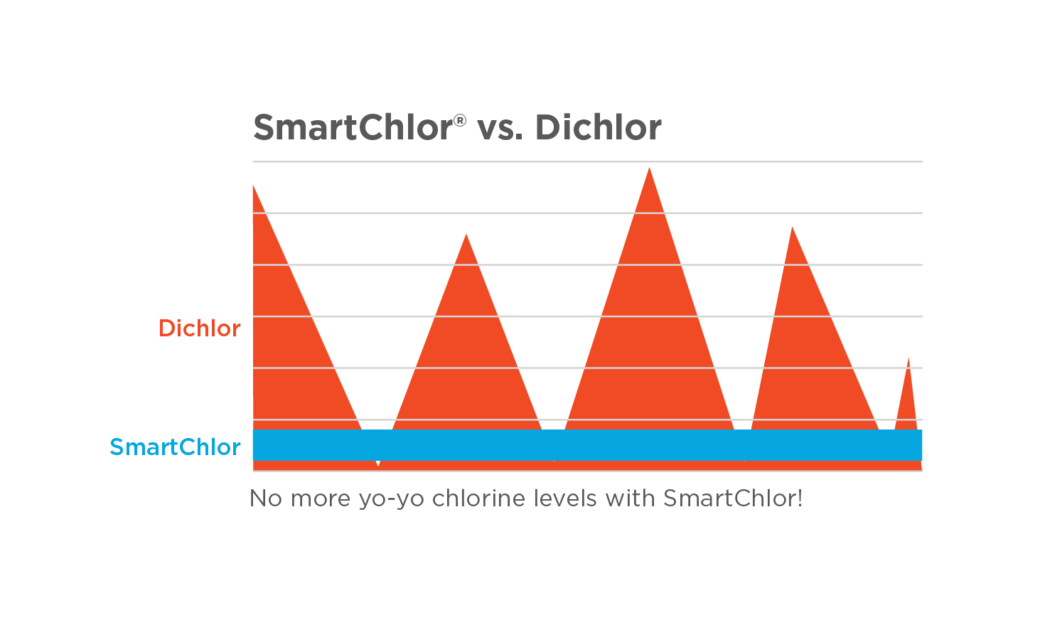
Because dichlor dissolves quickly, it’s used up immediately; often, more dichlor must be added each time the swim spa is used.
And that means chlorine levels spike and peak constantly.
Dichlor contains 57% cyanuric acid (CYA) by weight1. The Center for Disease Control (CDC) recommends not using cyanuric acid or chlorine products with cyanuric acid in hot tubs or swim spas2.
CYA protects chlorine from the sun’s UV rays, which is helpful for an outdoor swimming pool. But a swim spa is a smaller body of water than a swimming pool, and it’s covered when not in use. A buildup of CYA causes smelly water that’s harsh and irritating and causes the chlorine to become ineffective.
In a swim spa’s smaller body of water, CYA can build up within 7 to 12 weeks to a level that leaves a swim spa owner with no option but to drain and refill the swim spa.
Draining and refilling a swim spa is a long, arduous task; it can take up to a week with work required each day to restore fresh, clean water.
Alternatives to Chlorine
When it comes to chemicals – chlorine in particular – most people want to use less of them – and people have alternatives!
Non-chlorine alternatives include bromine or biguanides. Bromine works well in higher water temperatures. However, it’s not the preferred solution by retailers or consumers; it can damage spa equipment, has an odor, many complain about skin irritation, and takes longer to dissolve and build up to adequate levels.
Biguanides kill most living microorganisms – bacteria, viruses, and most algae – but it’s not an oxidizer. Biguanides can’t break down non-living contaminants like sweat, body oils, urine, cosmetics, or sunscreen. Instead, they continuously build up in the water making it increasingly cloudy, dirty, and unsafe. Biguanides can also provide a food source for biofilm, forming mold and pink slime.
Electrical devices like Ozonator, AOP and ionizers offer water sanitization, but must be installed and repaired professionally. All are considered secondary sanitizers, so a primary sanitizer is required, especially in case of electricity outage.
After all is considered, it’s no wonder that swim spa owners, and retailers are struggling to find the right solution for swim spa water care.
Finally, a Complete Solution to Sanitize a Swim Spa
Finding a solution that fits all of a customer’s considerations is important, especially for water care experts, who want to build trust and loyalty with customers.
One manufacturer now has a complete sanitizing solution for swim spas. King Technology, makers of FROG® products, launched FROG @ease® Sanitizing System for Swim Spas in 2024. It’s the first complete purpose-built sanitizer for swim spas.
“While we considered all the options for swim spa water care, over a considerable length of time, we landed on FROG @ease,” says Alex Granlund, product marketing manager for King Technology.
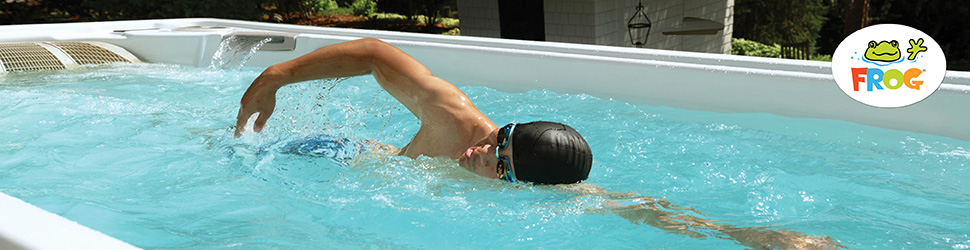
FROG @ease for Swim Spas uses SmartChlor®, a unique, patented chlorine that self-regulates and works in conjunction with FROG Minerals. Together, SmartChlor and FROG Minerals kill bacteria 2 ways, and shocking is required only once a month.
“Now, keeping swim spa water clean and clear is so much easier,” Granlund explains. “With FROG @ease, swim spa owners have one complete sanitizing system that’s purpose-built for the unique water volumes and temperatures of swim spas. Plus, the system uses much less chlorine – something everyone wants. It requires shocking only once a month – not daily or weekly – and keeps chlorine levels consistent.”
Retailers agree. “We’ve invited our swim spa customers to try FROG @ease for swim spas and they’re happy,” Doug Robinson of Virginia Leisure says. “People could never get chlorine levels consistent or low enough, now they can. And we enjoy consistent sales!”
Ease of use is a big factor. Cartridges are prefilled so there’s no measuring. SmartChlor releases continuously and slowly, adding more chlorine to meet demand, keeping a consistent 0.5 – 1.0 ppm chlorine level at all times. It contains no CYA so there’s no CYA buildup, which means draining and refilling can be put off for months.
For swim spa owners and retailers, FROG @ease Sanitizing System for Swim Spas is an easy answer to the question – “How do I keep my swim spa water clean and clear?” And a great way for retailers to build trust and loyalty with their customers – and repeat sales!
1. P.K. Data, Inc. 2024 U.S. Hot Tub Market (YE 2023)
2. cdc.gov/healthywater/swimming/residential/disinfection-testing.html