Fiesta Pools & Spas
How Travis Hogan and his team are shaping a culture of accountability and growth
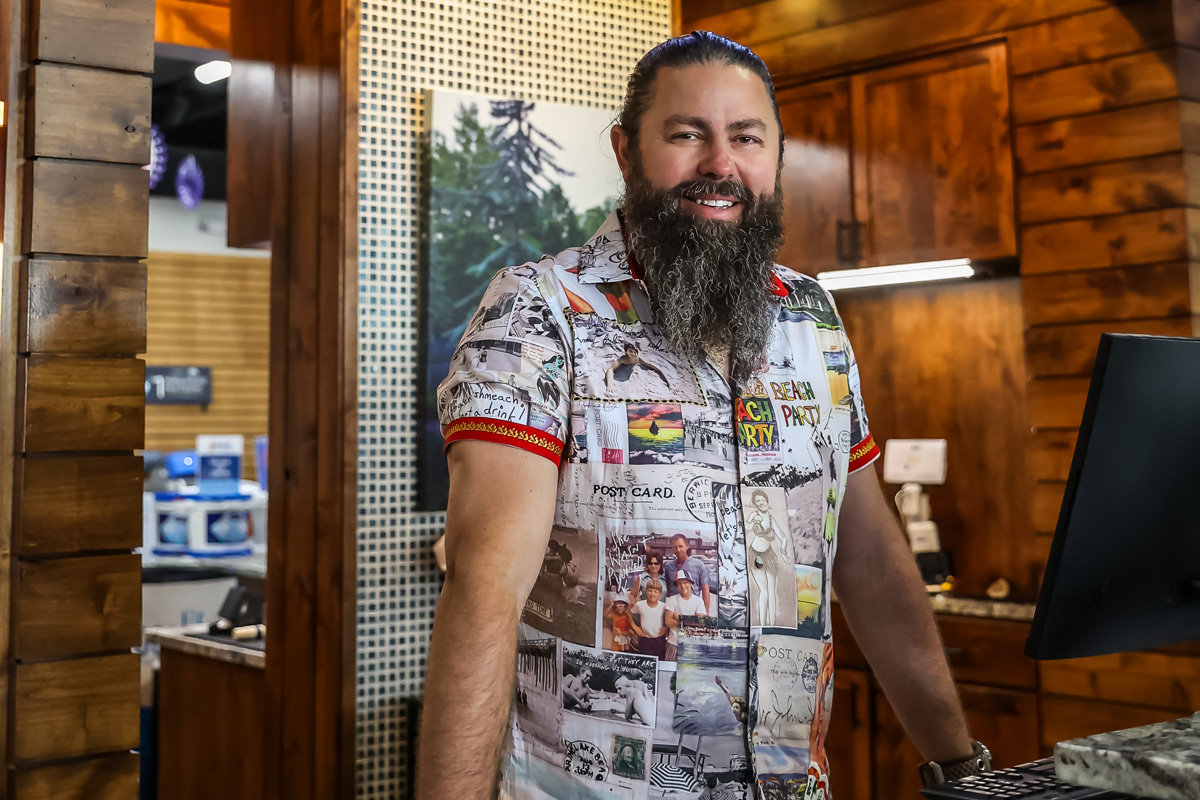
When Fiesta Pools & Spas opened in Tulsa, Oklahoma, in 1956, backyard pools were still a novelty, and the hot tub industry as we know it hadn’t even been born. Nearly 70 years later, the company has become a community fixture — a legacy Travis Hogan stepped into when he purchased Fiesta in 2004 at just 28 years old.
Hogan admits his start as an owner was overwhelming. “It was scary, and I realized quickly there was a lot that I didn’t know,” he says. But over time, his perspective shifted. Instead of asking what the business could do for him, he began asking what he could give to the business. That mindset change — paired with a focus on people and culture — has shaped Fiesta’s direction ever since.
Culture by design
For decades, Fiesta operated much like many family-owned businesses do: built on trust, loyalty and “tribal knowledge.” Longtime employees knew the ins and outs of every process, but much of that information lived only in their heads. While that worked for a while, Hogan recognized the need for systems that could scale.
That realization led Fiesta to adopt the Entrepreneurial Operating System, a framework designed to bring structure, accountability and shared vision to businesses. Weekly leadership meetings keep the team aligned, quarterly goals set clear priorities and documented processes help standardize everything from service calls to showroom sales.
That shift also meant redefining Fiesta’s culture. At first, Hogan inherited a staff loyal to the previous owners. Over time, he began building his own team, guided by newly established core values and a leadership group. “We live and die by our core values now,” Hogan says. “It makes our job a little easier. Sometimes it rules out people who don’t want to learn or be held accountable and just want a job.”
The effort wasn’t just about structure — it was about trust. Hogan admits he thrives on momentum but doesn’t always have the patience for details. “I’m a high-level, get-the-rocket-going kind of guy, but I’m not always good about fueling it up in the details,” he explains. “So then you put somebody behind you, an integrator, to work on the details so you complement each other.”
Mark Jones, Fiesta’s director of operations and online development, has been instrumental in translating Hogan’s big-picture vision into day-to-day action. “Travis has the big vision, but he [needs] the puzzle pieces to map out how to get there,” Jones says. “So being able to take that direction and turn it into concrete, actionable steps for each department — that’s where I come in.”
Making it trainable
One of the biggest challenges has been shifting from instinct to instruction. “Everybody knows how to do something, but it’s difficult to train that,” Jones explains. “We have to make it trainable and make sure we can make more Fiesta employees, not just bodies filling space.”
Documenting procedures has become a cornerstone of that approach. From how sales staff greet customers to how technicians handle service calls, Fiesta is building a library of standard operating procedures. The goal isn’t just consistency — it’s scalability. By creating repeatable systems, the company can grow without losing what makes it special.
That philosophy also extends to leadership development. Jones notes that newer employees are given opportunities to step up, even when it means holding veteran staff accountable. “There [could be] a person who’s been here three or four years holding a 20-year employee accountable for something,” Jones says. “That kind of leadership training and putting confidence into your people is a challenge, but it’s not insurmountable.”
A workplace with weight
Fiesta’s leaders want the company to stand out not just for its products and services, but for the value of its name on a résumé. Jones compares it to seeing Chick-fil-A or Eagle Scout on an application. “[My goal is] that if somebody has a summer job here through high school and goes somewhere and says, ‘I worked at Fiesta for a little while,’ that people go, ‘Oh, Fiesta doesn’t jack around. You picked up some skills,’ ” he says.
That reputation, Hogan believes, is built by investing in employees the same way Fiesta invests in customers. “Your team is sometimes your greatest asset and your greatest liability,” he says. “But at the same time, they’re what make the culture and why people want to come to Fiesta.”
Rooted in Tulsa, reaching forward
While systems and culture have been key drivers of Fiesta’s evolution, Hogan hasn’t ignored the fundamentals of business. Strategic real estate investments have provided stability, while its deep Tulsa roots reinforce its hometown identity.
Still, culture remains the through line. “A ton of our people have been here for decades, and their still being here proves how great they are, so we newer people who come in want to be worthy of that,” Jones says. “I want to make sure that they think I’m cool; I want the older kids to let me come to the party with them — that kind of thing. So, hopefully, as I get more years under my belt, I’m doing that for the newer people who come on. That’s how we build our strength.”
As Fiesta approaches its 70th anniversary, Hogan is focused on carrying forward the legacy he inherited while keeping the business nimble enough to thrive in the future. He is considering whether expansion should mean larger destination showrooms or smaller satellite stores, but the mission is unchanged: to meet customers where they are and build a business that lasts.
“Owning a business is not for the meek and mild,” Hogan says. “We’re still here, and I still like it.”