The History of Swim Spas, Part 1
The early companies and people who developed swim spas
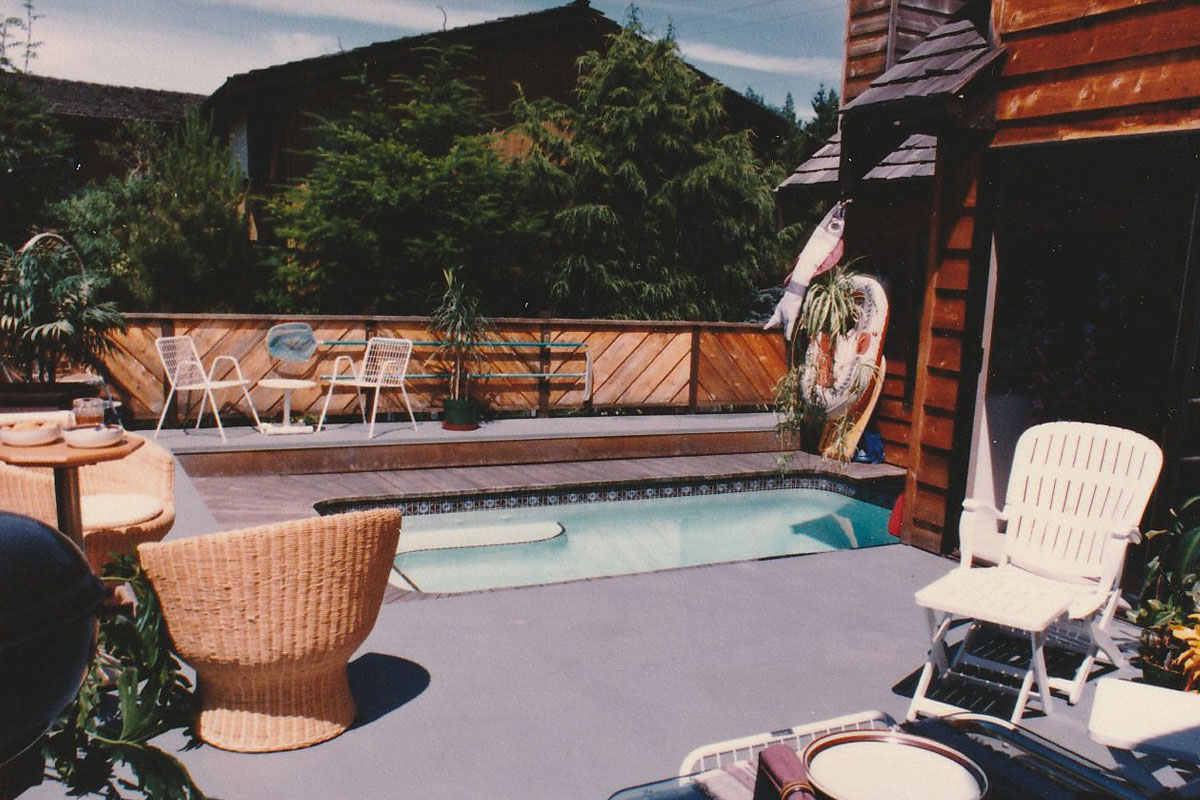
Swim spas may seem like a relatively new product for the hot tub industry as they gained prominence in the early 2010s. But the product is almost as old as the industry itself, with some prototypes developed in the late ’70s.
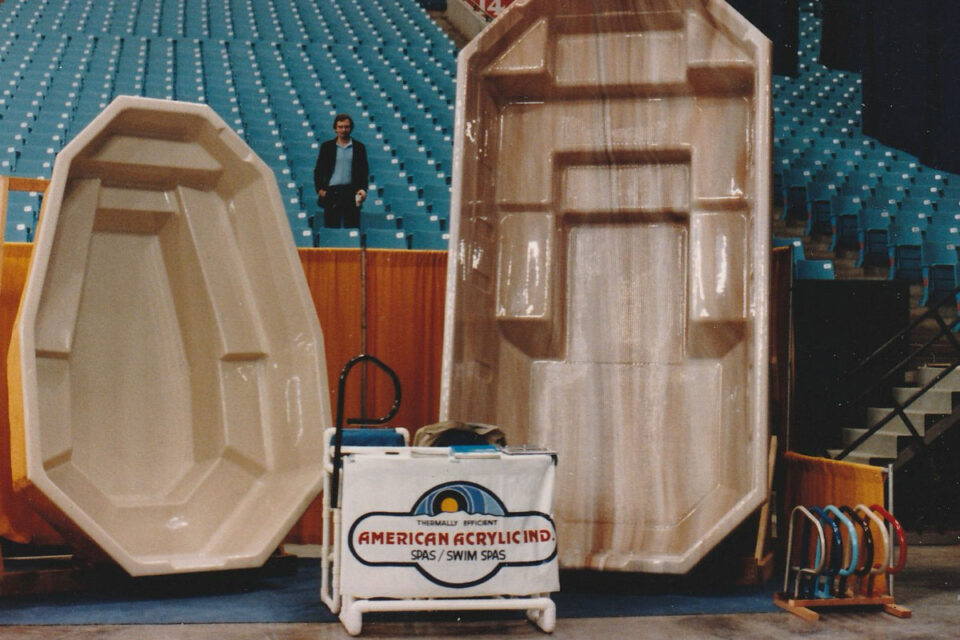
There may not be a consensus of who invented the swim spa, but there were a flurry of people and companies that began developing swim spa products at that time. In this reporting, the earliest (produced in 1979 or earlier) example of a swim spa found was sold by American Acrylic, though the company didn’t manufacture anything itself, so it was ostensibly produced by another nearby manufacturer, most likely Curtis Spas or Grecian Spas.
Without declaring a “first,” these companies had some version of a swim spa out in the late 1970s and early 1980s:
- Curtis Spas in Orange County, California, owned by Ken Cho (which became Catalina Spas when it was bought by Boyd Cargill);
- Seahorse Spas, owned by Roger White, based in Angleton, Texas;
- Rio Plastics/Aquaslide ‘n’ Dive, owned by Carl Meyer based in Brownsville, Texas;
- Grecian Spas, also based in Orange County, California, owned by Bill Russell;
- American Acrylic, again in Orange County, California, owned by Art Davis.
The geography, with swim spa manufacturing centers in California and Texas, creates some confusing overlap when it comes to who was first. The Texas conclave was somewhat disconnected from what the California group was doing and vice versa.
“Carl Meyer was the biggest acolyte and pusher of swim spas,” says Jim McClure, owner of H2oVision and industry veteran.
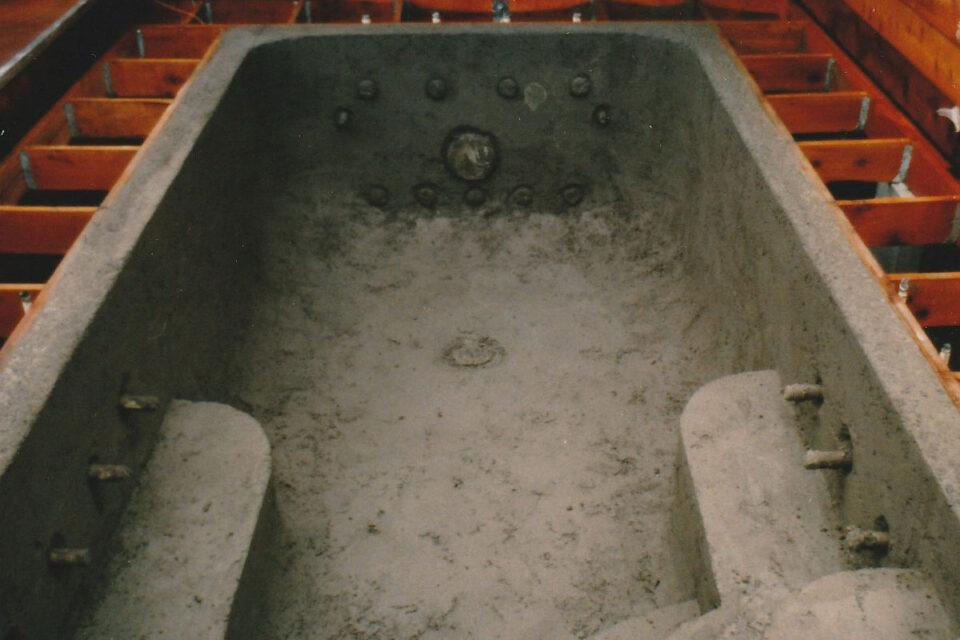
Craig Selvidge, who retired from Bullfrog Spas in 2024, built a concrete swim spa in his backyard in 1979 to help alleviate hip pain. Selvidge, who began selling hot tubs in 1977, built more than 50 of those swim spas for customers in the late ’70s/early ’80s and was highlighted in the trade press, which caught the attention of Art Davis, the owner of American Acrylic. Together they developed a mold based on Selvidge’s design and initially had Curtis Plastics make the shells for them, then Grecian Spas and then Seahorse Spas.
Before that, Davis had a long spa that he started putting jets in and calling a swim spa, but the 7-by-13 foot, and 36 inches deep, pear-shaped octagon with bench seating around the perimeter wasn’t very useful for swimming or exercise.
“ We were the pioneers,” Selvidge says. “It was a new business.”
“At first, [swim spas] were only in-ground, plumbed or preplumbed, insulated and shipped on pallets,” says Chet Lockwood, who was the national sales manager for Grecian Spas in the 1970s. “We were probably the first people to portablize — built a cabinet around them just like they did spas. In those days, we had underskirt gas heaters.”
Selvidge was building cabinets for his customers in that timeframe as well. The equipment would go on a pad nearby. Selvidge kept his retail business in Seattle going while also working as a rep for Art Davis, selling his swim spa and hot tub shells across the country. Unfortunately, he oversold what American Acrylic could afford to make and didn’t get paid for his first few months on the road. But his sales acumen caught the attention of Marquis Spas, and Selvidge ended up selling his business in 1985 and going to work for that company.
For those first few frenetic years, business was good. “The shells were like $1,400,” Selvidge says. “We were retailing for $7,999. We were making like 50%. It was huge back then. I was driving a Ferrari and living large, as an under 30-year-old young kid.”
When Bill Russell of Grecian got out of the hot tub business in the late 1980s, his swim spa molds and oven went to Beachcraft Spas in Portland, Oregon, and then over to Warm Springs Spas in Idaho, and eventually made their way to Dimension One Spas in San Diego. Which is one of the reasons why it’s hard to trace the swim spa history — the molds moved around, and the same shells were sold to companies across the industry.
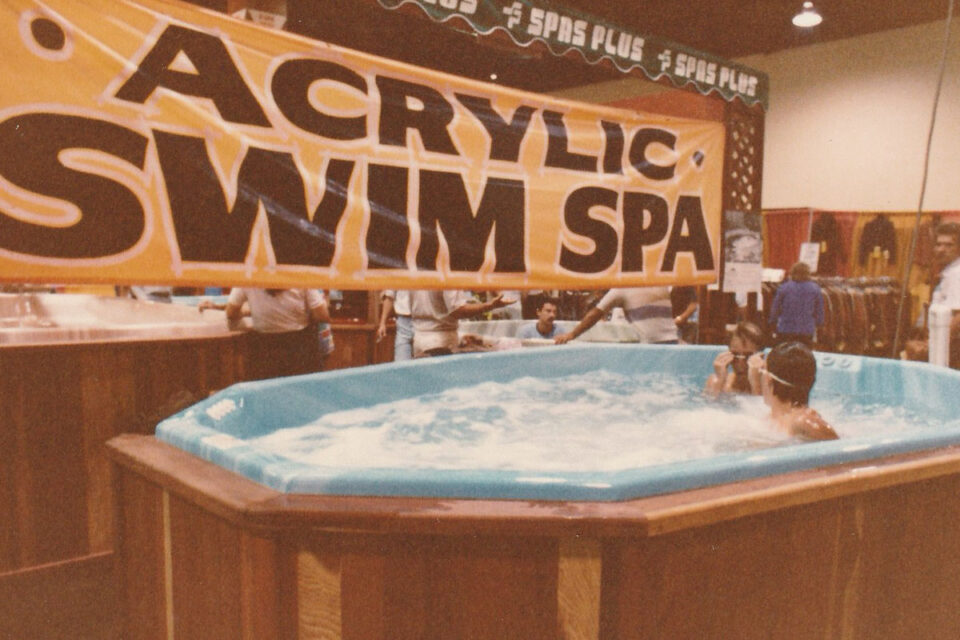
“I’ve got an old poster — it’s a picture of me swimming in an American Acrylic that Doug Armstrong [owner of Beachcraft] used for his swim spa,” Selvidge says. “That’s how Frankensteined the industry was back then. You just copied whoever had what.”
After the initial flurry, the swim spa market slowed. Many of the companies that were early adapters went out of business, and only a few remained invested in the category, such as Catalina Spas. The introduction of certification from Underwriters Laboratories also began to hinder swim spa development.
“ They weren’t deep enough,” Selvidge says, adding that a proper depth is 50 to 55 inches. “ That might be something you could attribute to that part of the industry dying because they weren’t properly designed. No one could draw acrylic deep enough.”
In 1981, Bob Lauter sold his first swim spa shell while working for Mid-Atlantic, sold to him by Selvidge. “By 1985 or ’86, we were doing 100-plus swim spas a year, just plumbed shells and the equipment pack,” Lauter says.
When he left to run the spa division at Fort Wayne Pools in Indiana, swim spas topped his list of projects. Making a swim spa out of acrylic was a challenge because few had vac form machines big enough and you couldn’t buy an acrylic sheet long enough. Instead, Lauter bought rolls of acrylic from Aristech and used a vac form machine intended for acrylic pool steps. Lauter, along with Sam Badiac, spent 1990 creating a swim spa, which they named AquaTrainer. In 1993 they sold almost 500.
Not many remember the Fort Wayne Pools AquaTrainer, but most in the industry know the AquaTrainer manufactured by Hydropool — and it’s one and the same. The swim spa went by the wayside when Lauter left Fort Wayne Pools and the molds and intellectual property was purchased by Hydropool. Lauter eventually bought Fort Wayne Pools, but “The swim spa got away,” Lauter says.
The release of the Hydropool AquaTrainer in 1996 wasn’t the company’s first swim spa though. In the mid-1980s, Hydropool imported and sold swim spa shells purchased from Seahorse.
After the business boom of the 1980s, the recession in the early 1990s slowed or halted new companies from entering the hot tub industry, and several went out of business. During this time, a few companies, such as Fort Wayne Pools, Hydropool, Spa Manufacturers Inc., Cal Spas and Sunbelt Spas came out with swim spas. It wasn’t until the housing boom of the early 2000s that most hot tub manufacturers began branching out into swim spas again. Innovators like Dimension One Spas and Master Spas entered the market, and longtime swim spa proponents like Catalina Spas doubled down. “Boyd was not afraid to take a chance,” McClure says.
This is when true portable swim spa models hit the market and become the norm. Instead of freestanding shells at the trade shows, companies were bringing fully contained units.
As soon as Master Spas could afford it, Lauter had a vacuum form machine made so he could build swim spas. “Swim spas are such an important category,” Lauter says. “They are such a high gross margin product. The first year we sold over 400 portable swim spas, which was amazing. I thought we would sell 150. Right from the get-go we were successful.”
But that sales number paled in comparison to when Master Spas brought on Michael Phelps as a spokesperson for its swim spas in 2009. “That was really a coup for us,” Lauter says. “Our swim spa sales jumped dramatically.”
It may have been a coup for the entire industry though, as many credit Master Spas partnership with Phelps as raising awareness for the category.