The Hot Tub Hustle
Soak up the sales at special events
Want to host buzzworthy events that get your hot tub customers bubbling with excitement?
Great sales events don’t just happen — they’re planned. From special partnerships to high-energy expos, we’ll break down how to generate buzz, engage your community and make your next hot tub event a standout success.
“The most important thing is creating urgency and reaching out to existing leads to hopefully push them to commit during the event,” says Jamie Burson, president and CEO of Great Bay Spa & Sauna.
The most important thing is creating urgency and reaching out to existing leads.”
Jamie Burson, Great Bay Spa & Sauna
Some hot tub retailers say every day is an opportunity to create that kind of excitement in your showroom. But if you’re looking to get creative, rejuvenate your sales team and increase sales, an off-site event is an option many retailers love.
Below, experts share what works well for revving up sales teams and exciting customers for special events, both on- and off-site.
Why special sales events are worth it
Special events like tent sales and expos aren’t just crowd-pleasers — they’re powerful sales drivers that create urgency, boost foot traffic and build lasting customer relationships.
Every year, Spas and More!, based in Missouri, hosts upward of 30 successful off-site events — from home shows to hot tub blowout expos. An early 2025 home show event brought in $890,000 in sales.
The blowout expos tend to be the company’s largest events with around 40 spas and swim spas on the floor, says Angi Hess, Spas and More! vice president and general manager.
“I really enjoy the big expos,” Hess says. “Sometimes, home shows can be a grind just because people aren’t coming there necessarily to look for a hot tub. But when you’re hosting a [hot tub] expo event, then people are there because they want to buy a hot tub. That’s usually where we get the bigger turnouts, and it’s a lot more fun to do.”
Special events give retailers a chance to showcase products in a high-energy setting, often leading to increased conversions.
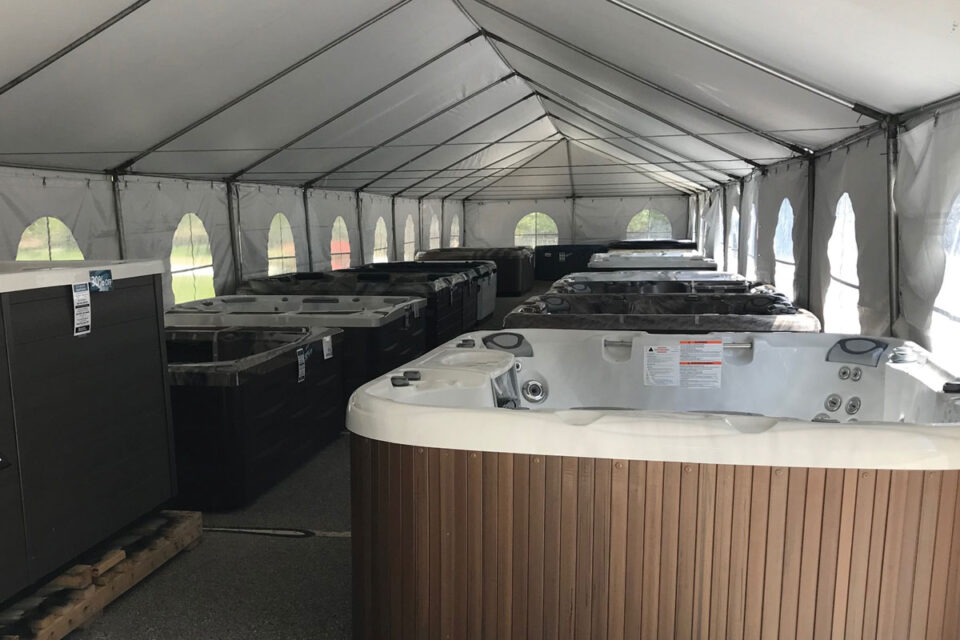
Partnering with other retailers at bigger events creates a unique opportunity to increase conversions and visibility because it means double the sales techniques and a chance to embrace competition.
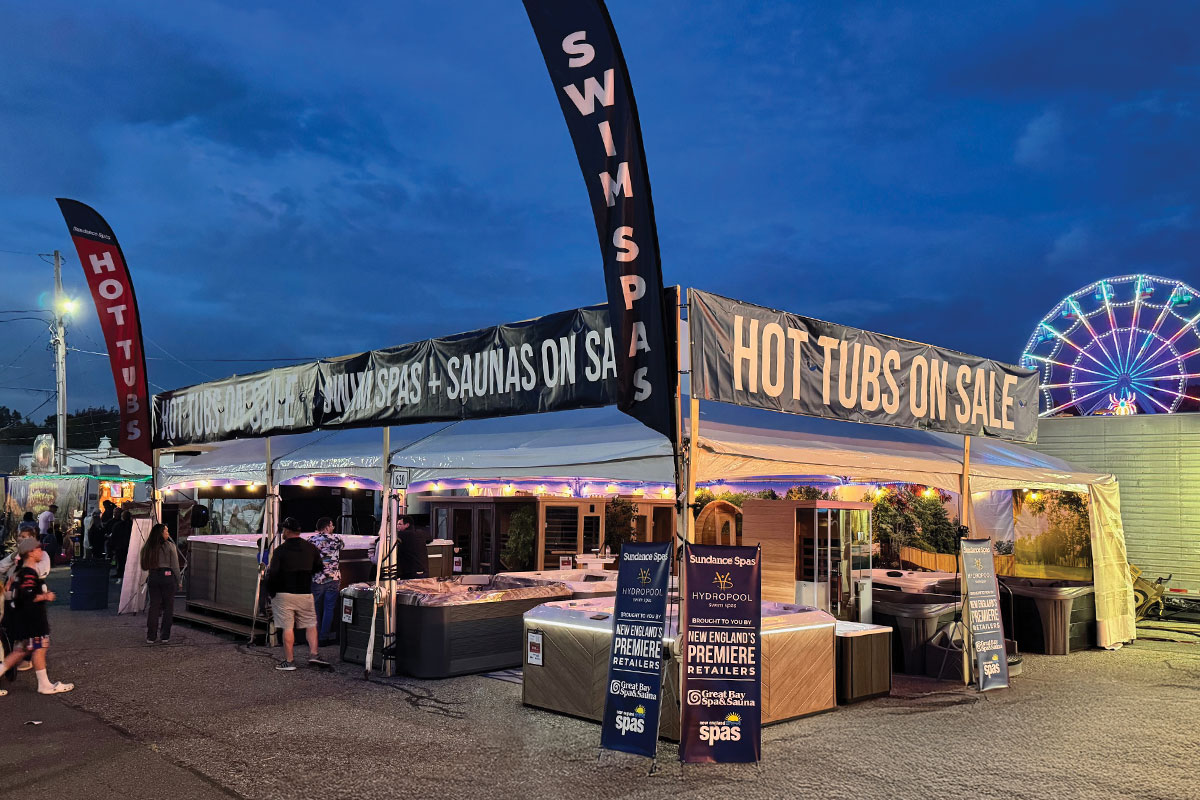
A few years ago, Burson’s team partnered with New England Spas at the Topsfield Fair, which sits on the border of the companies’ territories. Both tracked event costs and split staffing and then postevent, split profits evenly.
“Working together to do this event made the whole process easier and smoother,” Burson says. “Our staff share and learn from each other; we enjoy teaming up with each other and we will continue to look for ways to improve that will benefit both of us.”
The duo plans to work another event in the fall.
“Working with another retailer is not always easy, and I realize many companies would never consider it, but for us it just works,” Burson says. “I am always willing to try new and different things. The world is constantly evolving, and we as spa retailers need to be as well.”
Consider the purpose of your event
When choosing between a sales-driven versus community event, there are a few aspects to consider, including goals, says Crystal Lengua-Rowell, longtime spa industry expert.
“We always ask: ‘Are we promoting a new product?’ ” she says. “ ‘Do we need to clear aging stock? Is the priority to build long-term loyalty or generate short-term orders?’ ”
For retailers focused on sales events, Lengua-Rowell recommends in-store events with limited-time offer upsells like a free cover lifter or accessory credit. Another good time to do in-store events is when retailer promotions are tied to rebates, she says.
For community-focused events, it’s all about education, brand awareness and partner relationships. This includes events like hosting booths at wellness fairs, local charity events or customer how-to clinics, she says.
Create an experience
When there’s music blasting, food smells wafting and excited sales crews waiting, it’s hard for customers not to feel enthusiastic about spa shopping — especially if they have a coupon in hand for $500 off a hot tub.
Spas and More! uses mailed postcard coupons to generate leads — a tactic that engages rural and newer markets, Hess says. “Postcards do really well,” she adds. Experts say Meta ads, email blasts and even yard sale signs around town are high-reach methods as well.
Generating genuine experiences — whether in-store or off-site — that match the marketing hoopla matter, too.
For example, creating a sensory experience by running bubbling spas with LED lights and aroma beads along with ambient background music can set the tone.
“People naturally gravitate toward sound, color and steam,” Lengua-Rowell says. “This sets a calming mood while drawing attention to your product’s features.”
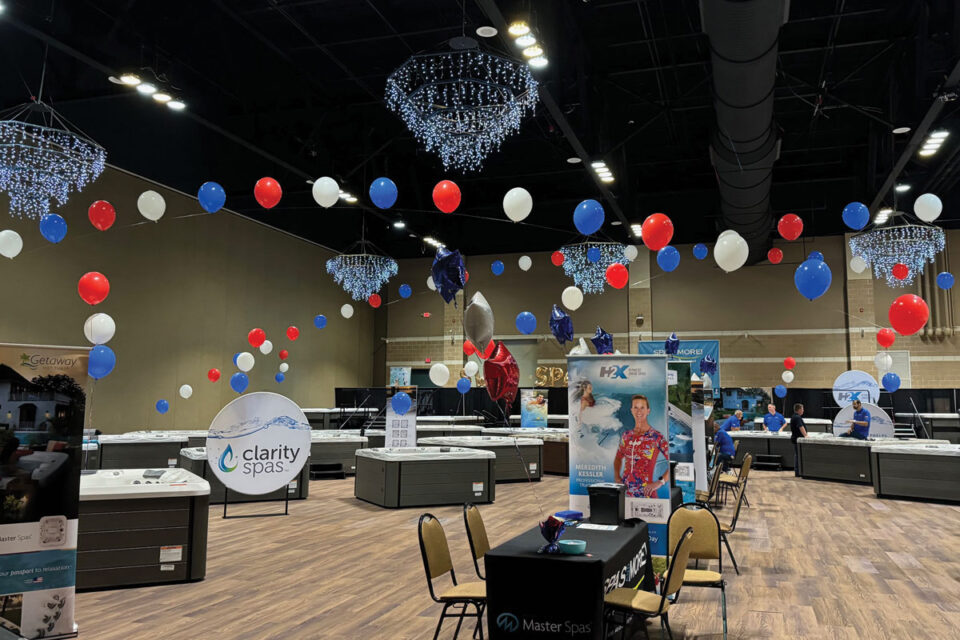
Lengua-Rowell also encourages retailers to set up booths with what she calls an intuitive flow. This includes creating layered interaction zones mixed with high-engagement product demos, medium-engagement information tables and low-engagement options for introverts that may include a visual board.
Giveaways can encourage prospects to open their wallets, too. From branded gear like test strips to high-value contests with prizes like free spa steps and cover lifters, promotions can incentivize attendance and attract social engagement.
On-site discounts are a favorite technique to seal the deal for other retailers.
“The aim is to get people to buy during the event to get the best deal,” says Sky Matula, president and CEO of The Hot Tub Store in northern California. “The style is much more pressing than our day-to-day showroom sales style, which is low-pressure and more supportive of the client’s project. We have in-house training sessions to go over the differences in how to sell at an event compared with the daily showroom style. The deals are only honored during the event, so the urgency is real.”
To ensure good attendance, both broad reach and targeted engagement are must-haves to incorporate using “layered promotion strategies and having clear measurement tools in place to evaluate success,” Lengua-Rowell says.
That means investing in email marketing, social media promos and even speaking opportunities, she says.
For true return on investment details, it’s important to track all costs, including labor setup and breakdown for each event. Adding a team debrief session to review what worked and how the stats compare to other events also helps with planning for the future.
“We build reports to show the true profitability of each event,” Burson says. “One important thing to note — some events may not be as profitable, but if the market reach is there, we look at that as branding and factor that into the ROI. We often sell products months or years after some of our events just because we made a positive impression on the prospect during an event sale. It is important to factor that into the equation.”
Consider the location carefully
Experienced retailers say the primary focus of these events is sales, not leads. Generating leads is a bonus, but the goal is to get the product off the floor before the end of the event — whether it lasts hours or days.
Not all events are created equal — and that’s exactly the point. The most successful spa sales events aren’t always the most elaborate.
“We’ve seen great success with tent sales right in our own parking lot,” Burson says. “They’re low-cost, easy to staff and effective when they look like real events — rent a large tent, fill it with product and create a visual that signals urgency.”
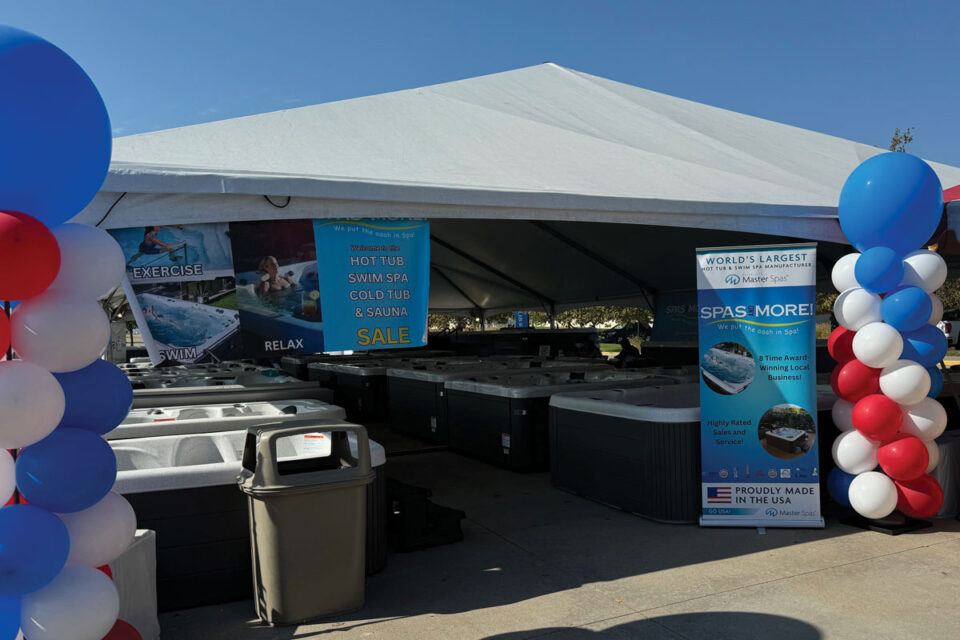
Tent sales are ideal for clearing inventory quickly while drawing foot traffic with a sense of excitement.
Meanwhile, expos can generate strong lead flow and brand visibility, especially when positioned as educational experiences. Matula prefers hosting expo-style events at his company’s warehouse and showroom locations to keep logistics and costs manageable.
“Moving tubs off-site adds expense,” he says. “By keeping events in-house, we maximize margins and minimize stress.”
Variety, of course, can also keep sales staff engaged and customers interested.
Additional options include open houses and customer appreciation days providing low-pressure opportunities to build relationships and reinforce loyalty. Whether aiming to offload inventory, generate new leads or simply nurture existing customers, choose an event format that aligns with business goals — even pop-up-style weekends can make it feel like something special is happening.
Pump up your sales team
Events can create a more charged, exciting environment that sometimes gets lost in showrooms because of the daily grind.
Lengua-Rowell adds that it’s important to remind staff to engage, not sell.
“Make sure event staff are trained to start conversations, not push products,” she explains. Questions like “What kind of space are you working with?” or “Is this your first hot tub?” can open an engaging conversation quickly.
Spas and More! sends a consistent team of experienced salespeople to off-site events. This group has worked together for years, developing a sense of urgency and building familiarity with prospects who attend similar events in the area.
Hess’ sales team meets days before the show to get updates on major changes from Master Spas, the spa manufacturer they sell. The sales team also gets details on the area demographics, the competition and sales techniques to give them the best chance to sell products.
Hess says reminding the sales team of any special partnerships can also help. A few times a year, Spas and More! donates a portion of its proceeds from its St. Charles shows to The Kaufman Fund, a nonprofit that supports veterans. Marketing that detail draws an audience interested in hot tubs while providing the opportunity to give back.
She also encourages retailers to invite their everyday partners — like electricians — to events so retailers can refer to them right away.
“Make it a one-stop shop,” she says.
Trial and error
For retailers who are nervous about dipping their toes into the special events waters, experienced retailers say to go for it.
One way to do that is to start small with in-store events and get team buy-in.
Sales teams “should be able to create the feeling that there is an event every weekend,” Matula says.
“We just need to inflate the balloons and put on the music and create the story of the event,” Matula says. “Anyone who comes to see us gets the great news that they are there for the huge sales event. Make it exciting and have the special deals ready. Tell them to spread the word about the awesome blowout sales event happening right now. Don’t let them miss out on the in-store expo they happened upon. Get your team good at creating an event out of no actual event, and then when you put money behind creating an actual event, the team will be ready to have great success.”
Planning a Successful Event
For a successful event outside the showroom, thoughtful planning and preparation are required. Here’s a checklist to keep in mind:
- Location – Where will you have the event? Call the town or city to get approval and any necessary permits.
- Marketing – Start planning your marketing strategy at least eight weeks out. What media do you want to use to drive traffic? Think about signage, displays, brochures, branding materials, etc., and get orders placed for all marketing display items.
- Display – For events, the goal is to showcase as much product as possible. Limited space? Use larger marketing materials for display.
- Staffing – If off-site, ensure there is appropriate coverage at your event and stores. There are several resources for temporary staffing and experts who specialize in event sales.
- Logistics – Come up with a plan for setup and takedown. You may have to use your delivery and service teams for a day or two before and after the event. Make sure to block off their time for the event.
- Point-of-contact list – Create a point-of-contact list with job titles that can be easily shared via text, apps or email. This ensures everyone knows where they need to be and who to contact to make the event run smoothly.
- Misc. – An event manager can create a brain dump list of all the details that need consideration. Will your event require power, lighting, computer use, Wi-Fi, printer, sales paperwork, etc.? Will your staff have restroom access, brochures or refreshments, etc.?
A final note: The goal is to have your event sales team as comfortable as possible working at the event. Make sure they have all the tools needed to close deals. Assign an event manager to organize the moving parts.