The Visual Language of Luxury Spas
How strategic merchandising moves can elevate your highest-ticket tubs
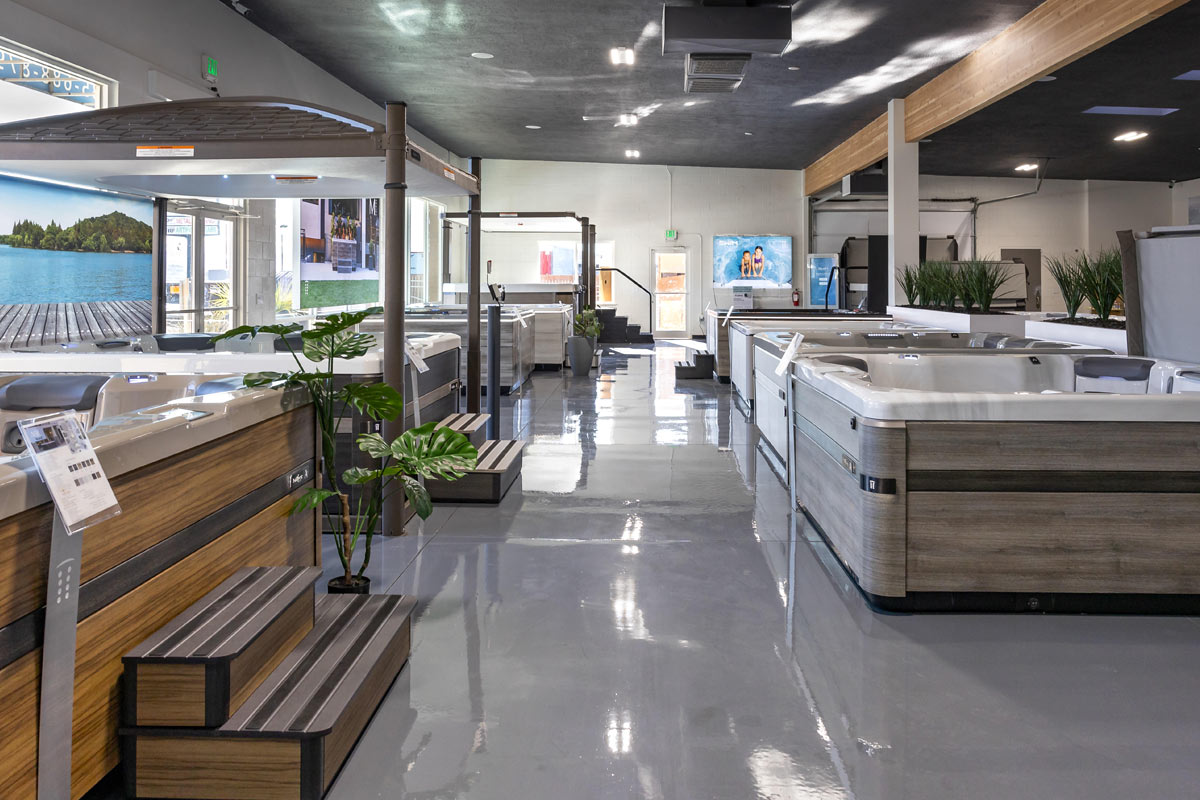
“Less is more” is the mantra of upscale retail businesses that attract high-income customers. Years ago, I ghostwrote the visual standards manual for Saks Fifth Avenue. When I ran into their visual team at a trade show, their corporate director of visual merchandising told me that almost everything I wrote is still used 30 years later. Standards don’t change, but the merchandise and fixtures do.
Hot tubs continue to skew toward higher-income households, with more than 70% of buyers reporting incomes above $75,000, according to Worldmetrics, and a significant share earning six figures. That means many of your customers are shopping at stores with higher-priced merchandise and are influenced by the “less is more” style of merchandising.
Additionally, the top 10% of U.S. earners (with household incomes of $250,000 and up) now account for nearly 50% of all spending; 30 years ago, they accounted for 36%, according to a 2025 report from research firm Moody’s Analytics.
“Space equals cost” is another core principle. Customers instinctively associate less crowding with higher-priced merchandise, but there is a fine line between creating space and looking understocked. It’s what you do with the empty space that can intrigue customers — or fall flat.
Lifestyle stores such as RH (Restoration Hardware), Terrain, Pottery Barn, Williams Sonoma and Crate & Barrel separate their expensive lines by creating more visual and aisle space. It doesn’t have to be a lot — just enough to say, “this is special.”
Here are ways to better showcase your higher-end products.
Placement
In Western culture, people “read” a store from left to right and naturally drift to the right. If you place your more expensive units toward the right side of your showroom, people will tend to walk in that direction first.
When I consulted for Danner Boots in Oregon, their new boots weren’t selling as well as their sale boots. The sale boots were on freestanding metal A-frame units perpendicular to a window wall. People came in, looked from left to right and walked over to them, so I suggested that they switch their merchandise, and sales of new boots increased almost immediately.
Look at your store layout and notice how people walk as they enter your showroom. If your front door opens to the far-right side of your showroom, people will gravitate to the left. In that case, position premium products where they’ll be seen first.
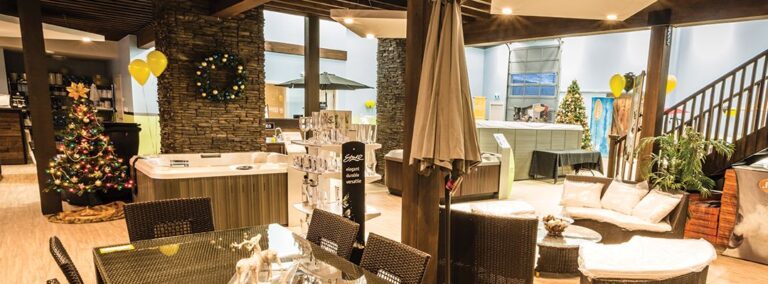
If you have seating for talking with customers, that can go in the dead zones — the front and back corners of the showroom — depending on where your stockroom doors are. Make them inviting by using comfortable chairs with arms and warm lighting. Consider adding a tall plant to visually anchor each of the spots.
Plants
Plants are essential in upscale displays because they create a sense of nature. People may ask if they are for sale. Sure — why not! Mark them up, let them go and replace them quickly.
Real or fake plants? That is up to your lighting and maintenance capacity. Fake plants should be dusted at least monthly, and real plants come with different watering and sunlight needs.
Spacing
If you usually place spa units 3 feet apart, change that to 5-6 feet for the more expensive lines. Or, for the higher-end units, create vignette-style displays that include taller trees, lights, fake grass, fake rocks — or real if you have staff with strong backs — and tall or hanging outdoor lights.
Include patio furniture (if you carry it), and all the accessories such as stairs, spa rails or a weatherproof shelving unit for towels. Consider contrasting color versus neutral displays to see what sells best.
Lighting
Good lights attract people like moths to flames. Once you designate focal areas for your higher-priced models, ensure you have overhead lighting to make them slightly brighter than the less expensive models.
If possible, layer lighting:
- Overhead lighting
- Decorative outdoor lighting
- Floor lamps or lanterns
Outdoor weatherproof floor lamps are widely available but rarely sold in spa stores — yet they provide ambience and a sales opportunity.
Signage
Signage matters, but too much can reduce perceived value. You’re selling a lifestyle.
Avoid placing loud promotional signage directly on premium units.
While white type on a black background looks classy, the contrast makes it harder to read for older customers. If you want a dark background, experiment with softer tones like deep blue, green or taupe.
Separate, decorate and light up your most expensive hot tubs and watch them sell.