Wellness for Small Spaces
Rethinking the modern backyard
Backyards are changing. Across North America — and especially in urban markets — homeowners are working with less outdoor space than they did a generation ago. Infill development, smaller lots and higher-density neighborhoods are reshaping what the typical backyard looks like. At the same time, expectations around lifestyle have dramatically shifted. Today’s homeowners are placing greater value on wellness and recovery, time spent at home. year-round usability and building spaces that feel intentional and restorative
This creates an interesting intersection: Less space, but higher expectations.
While this trend is especially noticeable in our market of Winnipeg, Manitoba, it reflects a broader shift happening across North America. Homeowners are adapting to shrinking space, rather than abandoning their outdoor living goals, by making every square foot work harder.
Hot tubs naturally align with this shift because of their compact footprint, year-round use and immediate wellness benefits, creating opportunity in the industry.
For many homeowners, the conversation is no longer, “Do I have room for a hot tub?” Instead, it has become, “How do I make my outdoor space work better for how I want to live?” Wellness is often driving those decisions, with owners looking for spaces that support relaxation, recovery, connection and everyday use without requiring a large property.
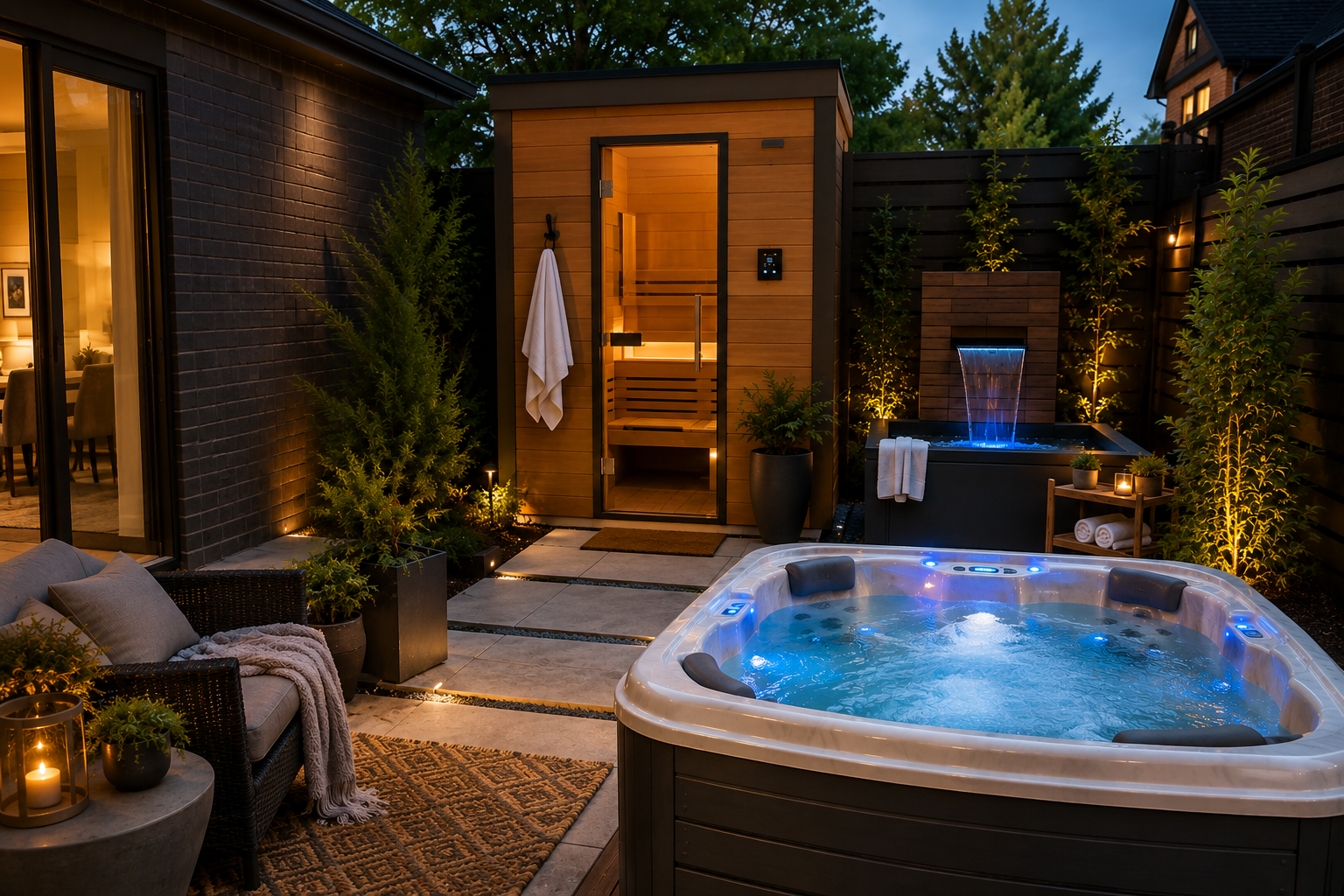
But more importantly, they can act as the anchor of a much larger conversation. Increasingly, homeowners are not thinking in terms of individual products; they are thinking of environments. A hot tub may be paired with a sauna for heat therapy, or even a cold plunge for contrast and recovery. In some cases, compact in-ground pools are being introduced into smaller yards — designed not for scale, but for experience. The role of the retailer, then, begins to evolve. It moves from selling a product to helping design a lifestyle.
Rather than leading with spa size, jet count or individual features, retailers can start by asking customers how they hope to use their outdoor space. Is the goal stress relief after work? Recovery after exercise? Family connection? A place to unwind throughout the year? Those answers often shape recommendations more effectively than square footage alone.
This requires a different approach:
- Understanding spatial constraints
- Guiding layout and placement
- Helping customers prioritize features
- Educating on how different elements work together
Retailers also have an opportunity to become trusted advisers. By helping customers visualize how a hot tub, sauna, cold plunge or compact pool can work together within a limited footprint, they provide value that extends beyond the product itself.
Careful placement, traffic flow and intentional product selection allow homeowners to create outdoor environments that feel complete, even when the footprint is modest. In many cases, the finished space is designed around how it will be used every day rather than how much it contains.
There is also a broader shift happening in how people think about their homes. Rather than moving to find more space, many are choosing to invest in the homes they already have, improving how those spaces function and how they feel. Wellness plays a central role in that decision. Features like hot tubs, saunas and cold plunges are no longer seen as luxuries reserved for large properties. They are becoming part of everyday living — integrated into spaces of all sizes. For retailers, this presents a clear opportunity to lead the conversation — not just around products, but around how those products fit into modern life. As this trend continues, retailers who position themselves around wellness, thoughtful design and lifestyle planning will be better equipped to meet changing customer expectations. Homeowners are increasingly looking for guidance, not just products, and the businesses that help them create purposeful outdoor spaces can build stronger relationships in the process.
The backyard may be smaller, but the experience it delivers doesn’t have to be.