Ready for Arrival
Why retailers should lead every step of the swim spa installation process
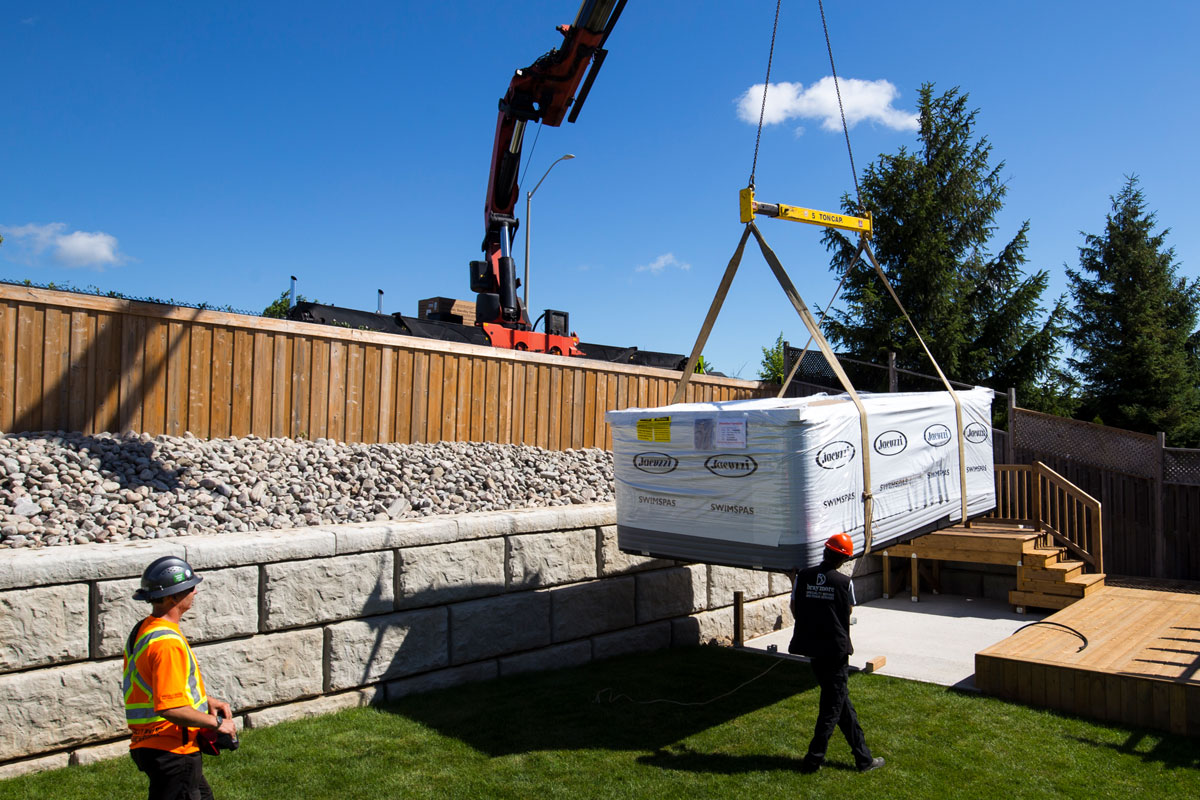
Preparing for a swim spa delivery requires much more than choosing a spot in the backyard.
Long before the unit arrives, customers need to address the foundation, electrical service, access, landscaping and delivery logistics.
Retailers should be the ones helping them connect those pieces.
The process starts with choosing the right swim spa model because that influences nearly everything else.
“Too often, customers want to start with the backyard layout or the price, but until you’ve locked in a model, you’re planning around a moving target,” says Andrew MacKay, senior director of channel marketing at Jacuzzi Group.
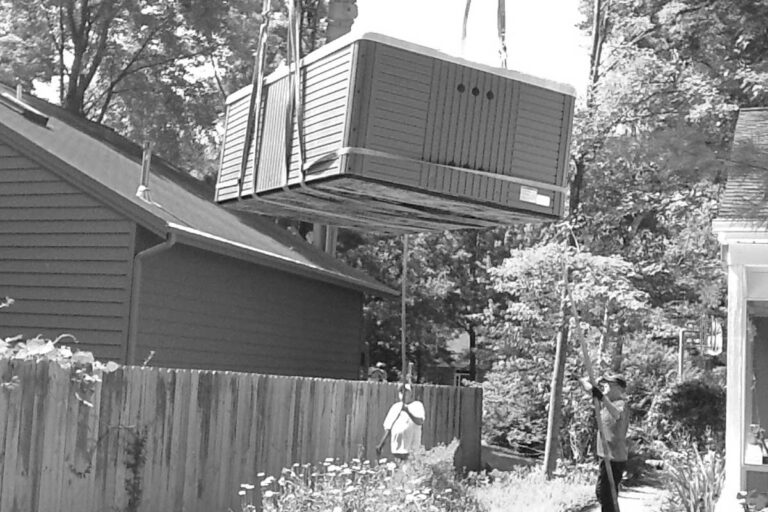
From there, retailers should walk customers through the complete installation — not simply the spa itself. That can include determining whether the site has an appropriate foundation, confirming electrical requirements and evaluating delivery access, including gates, overhead clearances and potential crane placement.
Addressing those details early can prevent delays and unexpected costs later.
Plan for the entire life cycle
James Lawrence, sales manager at The Spa Shoppe, says one of the most common planning mistakes he sees is homeowners creating a backyard project with a visual “wow factor” without considering the complete life cycle of the swim spa.
“It’s easy to focus on beautiful decking, landscaping, privacy features and creating an amazing outdoor space, but the most successful projects balance beauty with functionality,” Lawrence says. “We often encourage customers to future-proof their oasis. I use the analogy that you wouldn’t build a brand-new car and weld the hood shut. You know you’ll eventually need access for maintenance and service, and a swim spa should be treated the same way.”
Before the Sale
A Swim Spa Site Visit Checklist
Confirm the customer’s desired location
Measure gates and pathways
Check overhead clearances (trees, power lines, roof overhangs)
Determine whether crane service is required
Verify foundation requirements
Discuss drainage and grading
Review electrical service requirements
Identify service access needs
Discuss landscaping and decking plans
Review permitting requirements and installation timeline
Lawrence, who’s based in Canada, also encourages homeowners to think about winter accessibility, snow management, outdoor lighting and safe pathways from the beginning.
“Those details may seem small, but they have a huge impact on how often the swim spa is actually used,” he says. “When everything is planned together, the swim spa feels like it was always meant to be there — not just in July, but in January, too.”
Helping customers visualize the finished project can make planning conversations easier.
Sam Badiac, executive vice president at MasterSpas, encourages buyers to consider their vision before committing to a location, because once the spa is installed, changing course can be difficult.
“Many homeowners do not fully understand what is possible until they see a finished display or photos of completed installations,” Badiac says. “That is often when they can finally picture how the space could look in their own backyard.”
Be the project quarterback
Once customers know what they want, retailers can provide even more value by helping coordinate the people needed to make it happen.
“Because we’re delivering a project — not just a swim spa — the retailer naturally becomes the quarterback,” Lawrence says. “One of the biggest obstacles we see isn’t the swim spa itself; it’s the feeling of being overwhelmed by all the moving parts.”
Customers suddenly find themselves coordinating electricians, landscapers, concrete contractors, crane companies, delivery crews, permits and timelines.
“That’s where a great retailer adds value,” Lawrence says.
MacKay believes that level of coordination is especially important given the investment customers are making.
“Let’s put this in perspective,” he says. “This is an expensive product. For all intents and purposes, it is a pool. A customer spending $50,000, $60,000, $75,000 should be treated no differently than someone investing $200,000-$300,000 — at least not in the level of care and coordination they receive.”
The last thing that a customer wants to do is go home and fight with crane companies and electricians on their own, he adds.
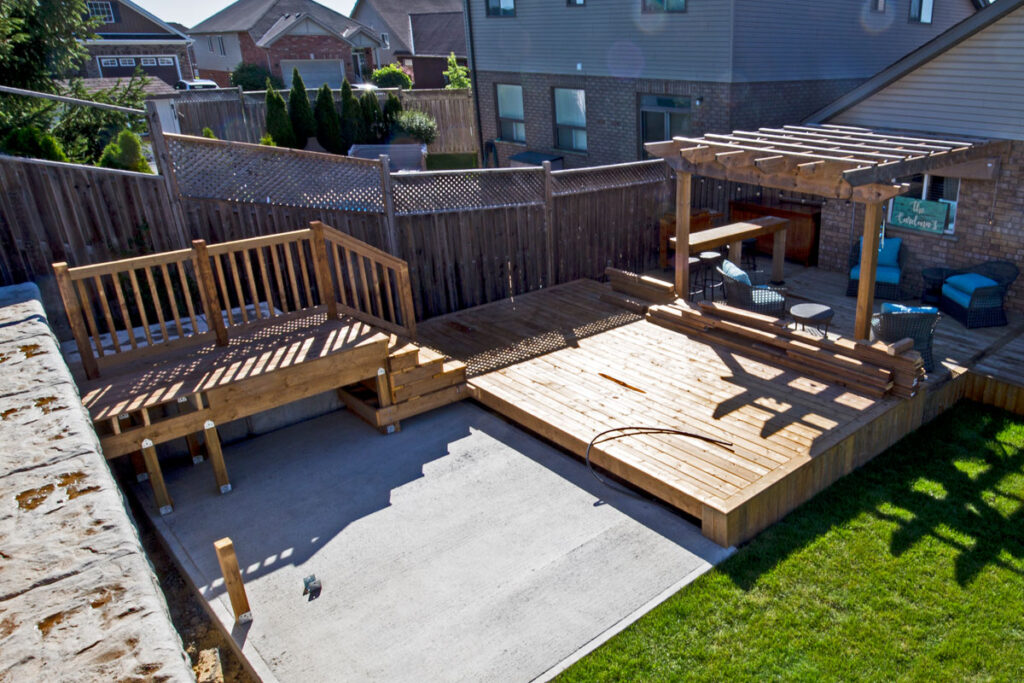
“They’re looking to us as retailers to be the experts. And we should be,” MacKay says. “The retailer needs to be either the general contractor or the general connector — someone who has established relationships with local contractors, electricians, crane operators and concrete professionals, and who can make the entire process seamless for the customer.”
The best retailers have a vetted network of trade professionals who already understand swim spa requirements — contractors who don’t need to be educated on the job. They do a site visit before the sale is finalized, walk the property, identify access issues and coordinate timelines so the pad is cured, the electrical is roughed in and the crane is scheduled before the unit ever leaves the warehouse.
“When the retailer takes ownership of that coordination, the customer’s experience on delivery day is exactly what it should be: effortless,” MacKay says.
He adds this message to retailers: “Your role has never been more important. You’re not just selling a product; you’re guiding customers through one of the most significant backyard investments they’ll ever make. When you take ownership of the education, the planning and the follow-through, you’re not just closing a sale — you’re building a customer for life.”
Lawrence says retailers ultimately should judge the job by more than whether the product reached the backyard.
“At the end of the day, we’re not measured by how successfully we delivered a swim spa,” Lawrence says. “We’re measured by how successfully we delivered the entire project.”