Is Easy the Next Luxe?
The rise of low-maintenance backyards
The old vision of a homeowner’s backyard retreat included an expansive lawn and elaborate entertaining spaces. Today, many seek a personal retreat that allows them to focus on their health and wellness goals — without giving up a space that feels luxurious. And, increasingly, “luxury” is being redefined to mean ease of ownership.
While spa purchases used to appeal primarily to older consumers, today’s wellness-focused backyard trend spans families with young children, dual-career couples and empty nesters. As David Ghiz, president and owner of Imagine Backyard Living in Scottsdale, Arizona, puts it, the goal is to create “a wellness retreat area in your backyard, regardless of the size.”
What a low-maintenance yard looks like
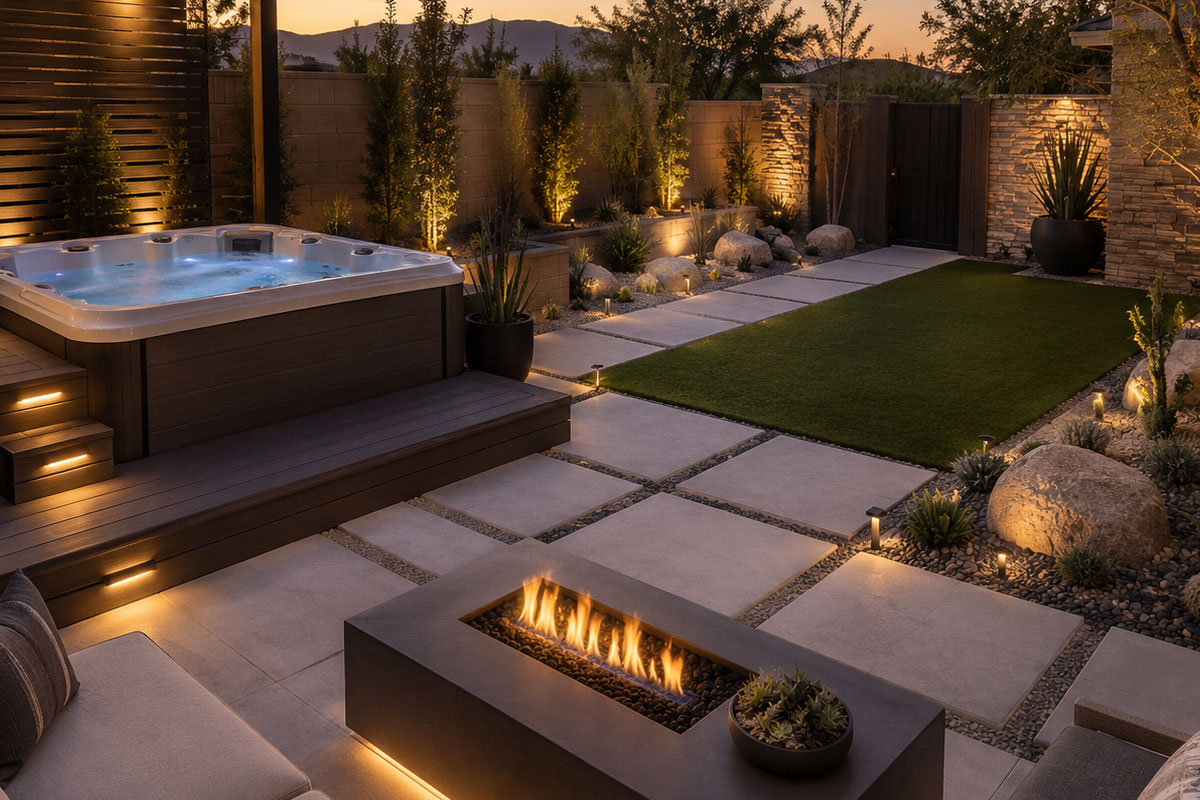
Low-maintenance doesn’t have to look low-maintenance. Landscape and hardscape options can add a luxe ambience, Ghiz says.
Today’s backyard designs begin with native plants or natural growth accustomed to the local climate, weather and typical soil composition. Rock gardens are visually striking and only require a few plants that need minimal fertilizing and watering.
Or they may not include greenery at all. Hardscaping elements, including concrete pavers, stone walkways and patios, can occupy most of the yard while reducing upkeep, and artificial turf is a popular alternative to grass.
“Homeowners [in Arizona] don’t want real grass,” Ghiz says. “They want low maintenance from a planting and care standpoint and low water usage.” That can be especially important in desert climates and drought-prone regions. Adding to turf’s appeal: “It always looks beautiful [year-round],” Ghiz says.
Durable materials are also becoming a bigger part of design. Jay Gavin, owner of Aqua Paradise headquartered in San Diego, says traditional wood decking is increasingly being replaced by synthetic alternatives that require less upkeep and often outlast the spa itself. The result is a backyard that looks polished without demanding regular staining, repairs or replacement.
One tip for even simple backyard spaces: “Don’t underestimate privacy for hot tub users,” Gavin says. “Sometimes this can be a challenge to build into your project while keeping your city happy and your neighbors happy.”
5 Questions to Ask Customers About Maintenance
1. How much time do you realistically want to spend maintaining your backyard?
2. Is this a primary residence, second home or rental property?
3. How often do you expect to use the spa?
4. Do you want to manage water care yourself?
5. How important is smartphone monitoring and control?
Bonus question: What does “low maintenance” mean to you?
Smaller spaces, smarter choices
As homeowners look for outdoor spaces that are easier to maintain, they’re placing less emphasis on size and more on functionality. Rather than simply making their backyards larger, many consumers are focused on making the most of their outdoor areas.
In Southern California, where backyard space often comes at a premium, Gavin says homeowners are prioritizing the amenities they’ll use most often.
“It’s not just popping [the hot tub] down into the backyard,” Gavin says. “We want to build that experience around it. We want to see sitting spaces. We want some nice lighting. Maybe we’ll want an outdoor kitchen.”
That same mindset extends to spa selection. Many buyers initially assume they need a larger model to accommodate gatherings, says Michael Swartz, owner of Heavenly Times Hot Tubs & Billiards, with locations in Dillon and Wheat Ridge, Colorado. In reality, “Two people are in their tubs 80% of the time, and maybe once or twice a year, six or eight people. You can have a small tub and still fit a larger group.”
For many homeowners, choosing a spa that matches everyday use rather than occasional events can reduce up-front costs, energy consumption and upkeep. Smart planning often matters more than square footage.
Technology makes ‘easy’ actually easy
Technology has become another key driver of low-maintenance ownership. “Everything is connected to a smartphone app now,” Gavin says. “The hot tub, the [water care system], the sauna, the lighting in the backyard, the barbecue. Everything we have is right there sitting in our pocket.”
Water care is another area where automation is reducing demands. Homeowners aren’t known for meticulously monitoring their spa water, and that’s often where problems arise. To address this, Arctic Spas has automated its saltwater system. “We have what’s called our Spa Boy System for the salt system,” Swartz says. “We have a medical-grade probe in the tub that tests the water every 10 minutes. If the sanitation is low, it will turn itself on to produce more.” The tub stays cleaner longer, without requiring homeowner intervention, he says.
For second-home owners and short-term rental properties, automation can be especially valuable. Swartz says maintenance services remain a significant part of his mountain-market business because many owners are not on-site regularly. Automated monitoring systems and dealer service programs help ensure the spa is ready whenever owners or guests arrive.
Spa technology can also monitor power consumption, allowing customers to track usage and operating costs, Gavin says. “You can actually see how many kilowatts it’s drawing through the smart tab app on the tubs,” he explains.
Smart technology isn’t always a priority for his Arizona customers, Ghiz says, but “they do like it when we talk to them about it. If they don’t live here full time, they can keep their eyes on their tub.” And, he adds, “We can keep our eyes on their tub, too.”
Easy ownership sells
As homeowners prioritize their wellness goals — and low-maintenance needs — new opportunities are emerging for spa retailers. In addition to spa sales, retailers can provide ongoing value through water care programs, maintenance contracts and smart-monitoring support that simplify ownership for customers. Dealers serving second-home and vacation-rental markets may be particularly well positioned to benefit from this trend.