Making Your Inventory Work for You
Tips from a systems expert
“That’s the way we’ve always done it.”
If that’s your approach to inventory organization, it’s time to up your game, says Mel Selway, president of P.A.R.T.S., a business systems analysis company based in Sahuarita, Arizona.
The spa industry is in the midst of change, expanding beyond hot tubs to cold plunges, saunas and even hybrid pools. Reimagining your storage systems to keep pace can save time, reduce costs and improve customer service — while creating new sales opportunities, Selway says.
Common pitfalls and mistakes
There’s a “façade fallacy” among retailers that as long as the showroom is organized, the storeroom must be too, Selway says. But an effective layout is more than neat shelves. It is a well-maintained storage and retrieval system that supports staff efficiency, customer service, inventory accuracy and profitability.
Common inventory management issues include:
- Inconsistencies between stock on the shelf and on the books. No customer likes to wait at the counter while a search party locates a missing part or accessory. The result can be frustration, possible lost sales and a lack of confidence in the retailer.
- Lost sales that aren’t tracked. When customer demand is not filled from stock and the item is not ordered, the opportunity disappears. These missed sales should be recorded and revisited. Every employee should ask customers before they leave, “Was there anything you wanted today that we didn’t have?” That question can reveal demand for products, services or accessories that may otherwise go unnoticed and unrecorded.
- Slow-moving inventory. Excess inventory takes up valuable space and ties up capital. Accurate records should be monitored regularly, so management can identify products that need to be discounted, promoted or discontinued. This process also requires coordination with the sales team to understand why items aren’t moving.
- Mixing retail and service inventory. Keeping retail merchandise and service supplies in the same area increases retrieval time and creates inefficiencies.
- Failing to rotate inventory. This is especially important for chemicals with recommended shelf lives. Unsold inventory that has exceeded its usable life may need to be discarded, taking up valuable space that could be used for fresh stock.
Many of these issues are connected. Slow retrieval times, inaccurate inventory records and missed sales opportunities often stem from the same cause: a storage system that has evolved over time rather than being intentionally designed.
Systems and solutions
Every retailer has an inventory budget. It’s measured not only in dollars but also in space. “People forget that space is three-dimensional,” Selway says.
- Follow the “golden rule” of stockroom organization. Store fast-moving items between knee and chest height and position them as close as possible to the counter or transaction point they support. If you have both retail and service departments, that may mean creating separate retrieval zones so each team can quickly access the items they use most. While organizing by part or accessory number seems logical, it can increase retrieval time if it doesn’t reflect how products are actually picked.
- Use the same principle as your refrigerator. Store older inventory in front and replenish from behind. This is especially important for chemicals and other products with expiration dates. When you restock displays, move older products to the showroom floor first.
- Know what your software can and cannot do. If your inventory system lacks an expiration date field but includes a blank field, repurpose it. Then run a report showing products that will expire in the next 30, 60 or 90 days, depending on your cycle. If your software doesn’t support expiration tracking, create a visual system. Use color-coded adhesive dots like red, yellow, blue and green for each quarter and write the expiration date on the label. These are visual clues, no matter who is looking at them.
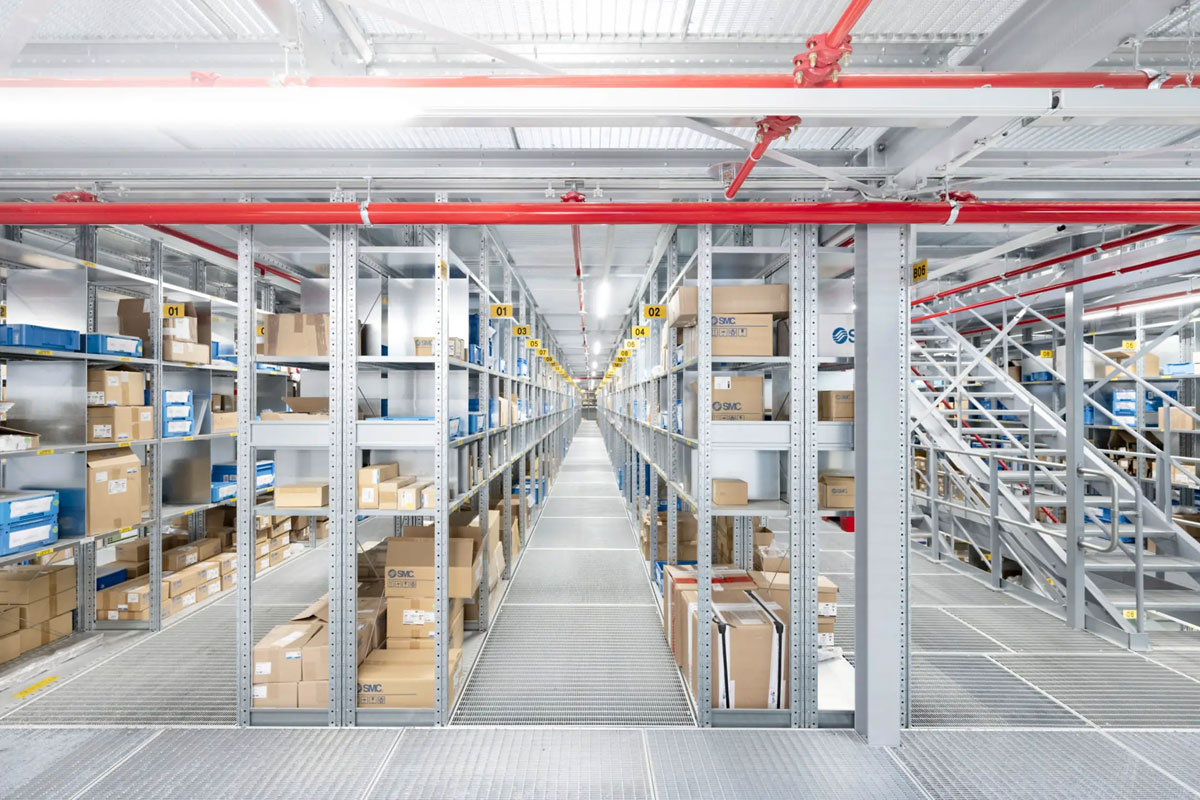
- Reconfigure shelving to better fit smaller items and quantities stored in small bins. Selway refers to this as managing inventory by “size quantity.” He also recommends evaluating whether existing shelving systems are making the best use of space. For retailers considering upgrades, he points to modular warehouse systems such as those offered by SSI Schaefer because they can be reconfigured easily as inventory needs change.
- Conduct regular management walk-throughs. Selway’s approach is what he calls “management by walking around.” Empty cartons, empty spaces and general clutter are signs of a larger organizational issue. “Get rid of the things that aren’t supposed to be there in the first place,” he says. Paying close attention can uncover surprising opportunities. Selway recalls conducting a walk-through at a Harley dealership and locating 10 missing GPS devices sitting on the shelves. “And I didn’t use GPS to do it,” he jokes.
- Use skip-letter numbering for shelf assignments. The top shelf is always “A,” the bottom shelf is always “Z,” but intermediate shelves purposely skip letters. (You never use all 26 letters when setting up, he says.) Leaving gaps allows new categories to be added later without renumbering every bin location.
- Hold staff accountable. Inventory accuracy affects everyone. Run daily inventory and sales reports, update procedures as needed and ensure employees understand and follow your standard operating procedures.
From organization to profit
Efficient back-of-the-house merchandising allows for stronger customer interactions. When employees can quickly locate products and trust inventory records, they spend less time searching and more time recommending accessories, upgrades and complementary products.
Efficiency also reduces transaction times, especially important during peak seasons when in-store traffic and expectations are highest.
Slow-moving inventory drains space, capital, insurance dollars and profits. Regular reporting can help answer important questions. Are these products being marketed effectively? Are employees engaging customers on the showroom floor? Is it time for a promotion, holiday sale or clearance event?
Once you’ve built a solid inventory system, the products themselves may change, but the process remains the same. New categories, seasonal products and emerging wellness offerings can come and go, but an organized system continues to support efficiency and sales. Then you move from “when I get around to it” to “done.”