Worth the Money
How the right lighting strategy can make merchandise stand out and keep customers shopping
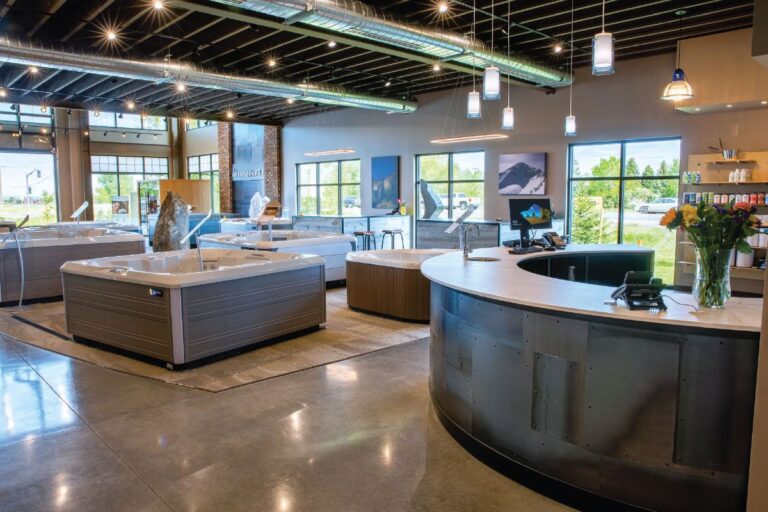
We can’t fight our evolutionary instincts when it comes to lighting. As animals, we require a sense of safety when we enter a space — or a cave.
I love to shop, but two of my favorite stores lost me as a regular customer because of their overhead lighting. One store changed locations, and the lighting in the new space is about half of what it was. Now, when I walk in, I’m frustrated because I feel like I’m shopping in a dark cave.
The other store had metal halide “natural sunlight” HID lights that made everything appear flat and cheap. It was irritating to look at high-quality goods with this ultrabright white light. Nothing looked appealing.
As we age, everything looks dimmer. A person over 50 will perceive your showroom as if they are wearing dark sunglasses compared to someone under 40. People’s eyes age differently, so these timelines aren’t exact, but the concept is simple — people middle-aged and older need significantly more light to see than younger people.
By the time you turn 60, your pupils may decrease to about one-third of the size they were when you were 20. The pupils may react more slowly to darkness and bright light. This is why, when we walk into a store from outside, our eyes take longer to adjust.
The last thing you want to do is annoy older customers with a dim environment, but changing lighting can be expensive.
If you inherit a store with overhead fluorescent lights and you decide to save money by figuring they’ll “work” for now, chances are high that you will live with those lights for many years.
It almost always pays off to address the lighting during the build-out process. If you’re moving into a new space, add a good mix of lighting up front, and you won’t have to worry about it for many years.
Showroom lighting cheat sheet
- Light for your oldest customers. They will appreciate it and your younger customers will as well.
- Add PAR LEDs in 2700K to maximum 3000K.
- Avoid “daylight” lamps and rounded, globe-style bulbs.
- Position spotlights and floodlights 3-4 feet out from the face of your fixtures and 3-4 feet up from the fixture tops.
- Adjust the light fixtures so they don’t blind anyone.
- Light your merchandise, not your floors, unless you need light on a level change.
- If you have fluorescent lights, make sure they are all the exact same color rendition. Warm is better than daylight. You don’t want a polka-dot ceiling.
What is good lighting?
If you’re dealing with overhead fluorescent lights in your showroom and retail area, you have the basics — flat, semibright lighting that essentially illuminates the air.
But to make sales, you need to add emphasis and create drama. Sameness in lighting levels sucks the life out of a space, making it difficult to see what matters, says Seanette Corkill, a retail designer and lighting expert. You need specialty lighting to highlight focal areas on the sales floor and along the walls.
“Put your money into lighting up the perimeter so customers can see the places in the store they want to go,” Corkill says says. “You don’t need to take out the fluorescents; just add track to create more dramatic lighting.”
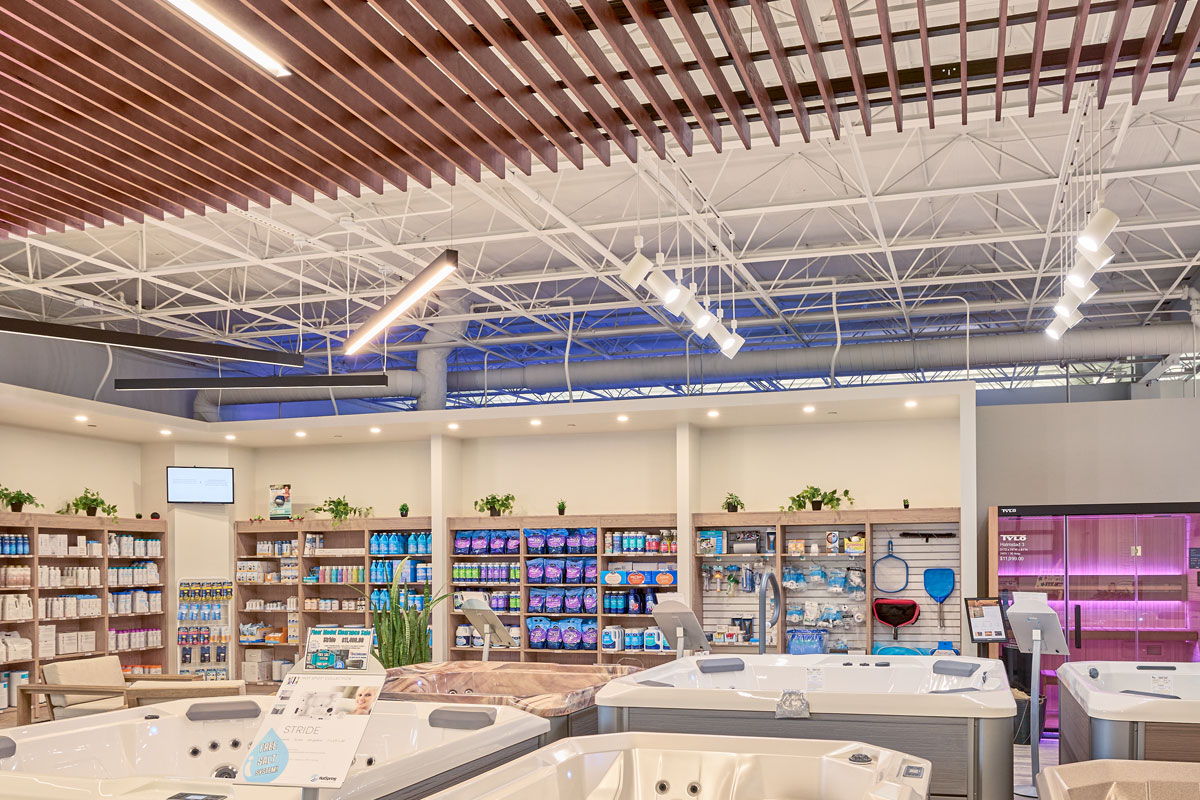
When you add track lighting, position it between 3-4 feet from the front face of your wall fixtures and 3-4 feet above the tops of those fixtures, she says. Any higher and you’re wasting the light.
You’ll achieve the light levels you need while maintaining the flexibility to focus fixtures where they are needed most.
Lighting specifics
When you are buying LED lights, you can choose your beam spreads — how wide the beam shows up on the wall or floor fixture.
A spotlight generally spreads about 20 inches, while a floodlight (depending on the beam angle) can illuminate up to 9 feet.
If you overlap spotlights on either side of a floodlight, you’ll create a more visually interesting display wall. You can also use the spotlights to highlight newer or more expensive merchandise.
For a 10-foot wall section, use a floodlight in the center of the track with a spotlight on either side, positioned about 3-4 feet from the center.
Generally, avoid “daylight” lamps, which are often too blue-white and feel cold. Warmer light sources create a more inviting atmosphere, and when positioned correctly, they will illuminate your walls and spas beautifully while helping merchandise appeal to customers of all ages.
Where to hang track lighting
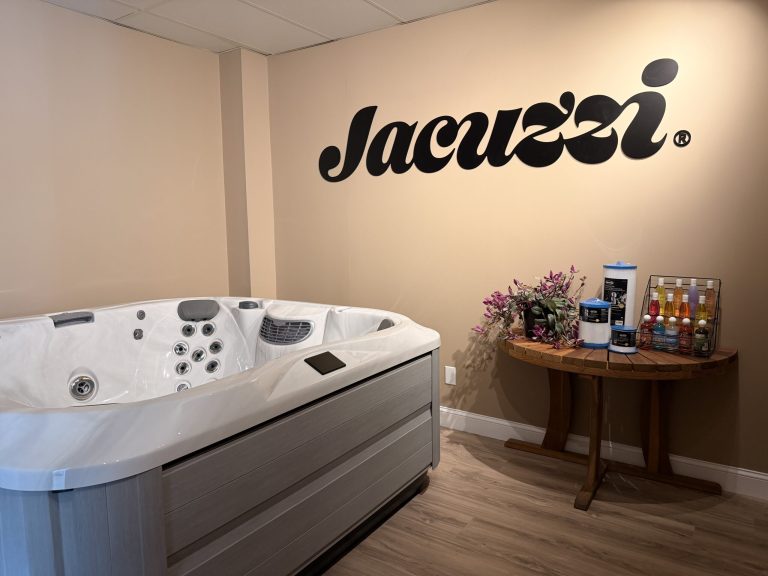
If you display hot tubs against the walls, position the track approximately 6 feet out from the wall. This allows you to light up each unit properly and make it pop.
For units in the center of the sales floor, tracks can be suspended directly above the displays, depending on ceiling height.
Consider using one spotlight and one floodlight per unit. The spotlight highlights a specific feature of the spa, while the floodlight illuminates the entire unit.
For your accessories and chemicals area, make sure you highlight the faces of the products on both wall displays and floor fixtures. Short runs of track may be necessary to ensure every display is properly illuminated.
What type of LED spotlights and floodlights?
PAR-style lamps have a flat face with small reflective facets that direct light much like the adjustable nozzle on a garden hose. Rounded or globe-style bulbs disperse light in all directions, more like a misting nozzle, making them less effective for highlighting landscape features.
PAR LEDs in the 2700K to 3000K temperature range usually work best. Anything over 5000K appears too bright and white, making merchandise look flat.
Good lighting will do more than just set the mood; it’ll help you close the sale.