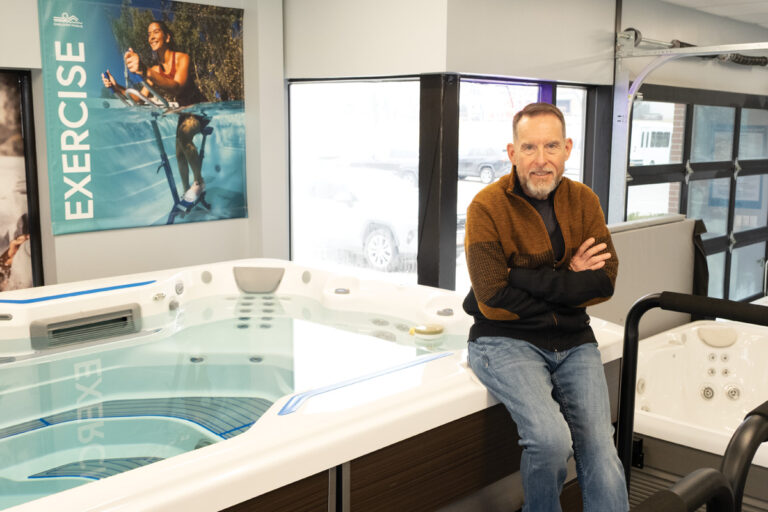
Core Covers: Beyond the Bi-fold
Core Covers’ rolling design addresses long-standing challenges in durability and ease of use
Customers typically replace a spa cover three to five times over the life of the unit, making durability, efficiency and serviceability critical.
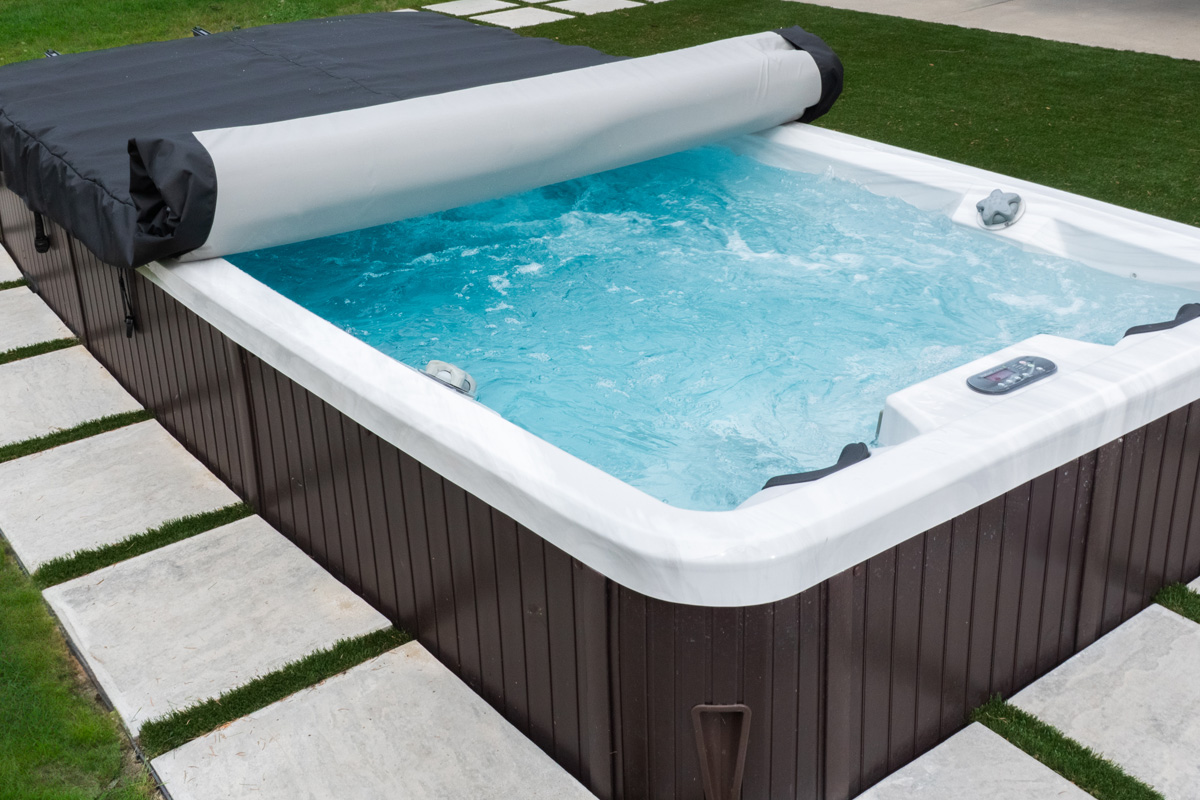
With its new rolling spa cover, Core Covers aims to address all three.
“The cover category hasn’t fundamentally changed in decades,” says Chris Thompson, CEO of Core Covers. “Traditional bi-fold covers insulate effectively, but they’re heavy, require lifters and become more difficult to handle as they age. We saw an opportunity to rethink both usability and structural design.”
Core Covers set out to improve usability without sacrificing safety or thermal performance. The result: a rolling spa cover.
The cover was engineered to deliver true one-person operation while maintaining structural integrity and a continuous seal. It is designed for real-world use, including daily rolling, harsh weather conditions and long replacement cycles.
“The objective wasn’t to introduce a novelty spa cover,” Thompson says. “It was to solve a long-standing functional challenge in a measurable way.”
The rolling spa cover uses a patented support-rib design that eliminates fiberglass and integrates reinforced EPS foam with a galvanized steel C-channel, improving stiffness, load distribution and long-term dimensional stability.
Fiberglass, Thompson notes, can splinter, absorb moisture and weaken under repeated flexion. The rolling spa cover’s internal structure is secured without screws or fasteners, eliminating stress concentration points and reducing long-term loosening or failure.
From a durability standpoint, the cover withstood 275 pounds in static load testing under ASTM F1346-23 standards and passed 2,000 open-and-close simulated cycles with zero structural degradation.
“That’s real-world validation,” Thompson says.
Interchangeability in the ribs was also a focus.
“By engineering the support structure to be fully serviceable at the component level, we’ve significantly reduced the risk that a minor issue (such as foam panel breakage or warping) results in a full-cover replacement,” Thompson says. “Our design minimizes those common failure points altogether, and in the rare event service is required, components can be addressed individually rather than replacing the entire unit or sending the cover back to the manufacturer for repair.”
The result is lower warranty exposure and reduced ownership costs for dealers and consumers.
From a service perspective, the design allows for faster diagnostics, quicker repairs and reduced freight. Customers can address a specific structural element without replacing the entire unit, protecting dealer margins and minimizing customer disruption.
“In a category where covers are replaced multiple times over the life of a spa, serviceability directly impacts profitability,” Thompson says.
In addition, the rolling spa cover features an exclusive WeatherShield solution-dyed polyester outer skin that is 25% lighter than traditional vinyl and three times stronger. Core Covers also integrated an exhaust mesh vent to allow controlled air release during rolling and unrolling, creating smoother operation. The closed-cell, irradiation cross-linked foam padding maintains structural consistency while absorbing load efficiently.
The integrated mesh vent also allows rapid water evacuation if the cover drops into the spa, reducing retained weight and supporting structural integrity.
“Together, these design decisions enable reliable one-person handling without sacrificing seal integrity,” Thompson says.
With the recent launch, most early feedback has come from dealers and OEM partners who interacted with the rolling spa cover at industry trade shows, including the 2025 International Pool | Spa | Patio Expo in Las Vegas.
“There’s a clear difference between describing a rolling cover and having someone operate it,” Thompson says. “Once dealers and OEM partners rolled it themselves, the conversation shifted from interest to commercial opportunity.”
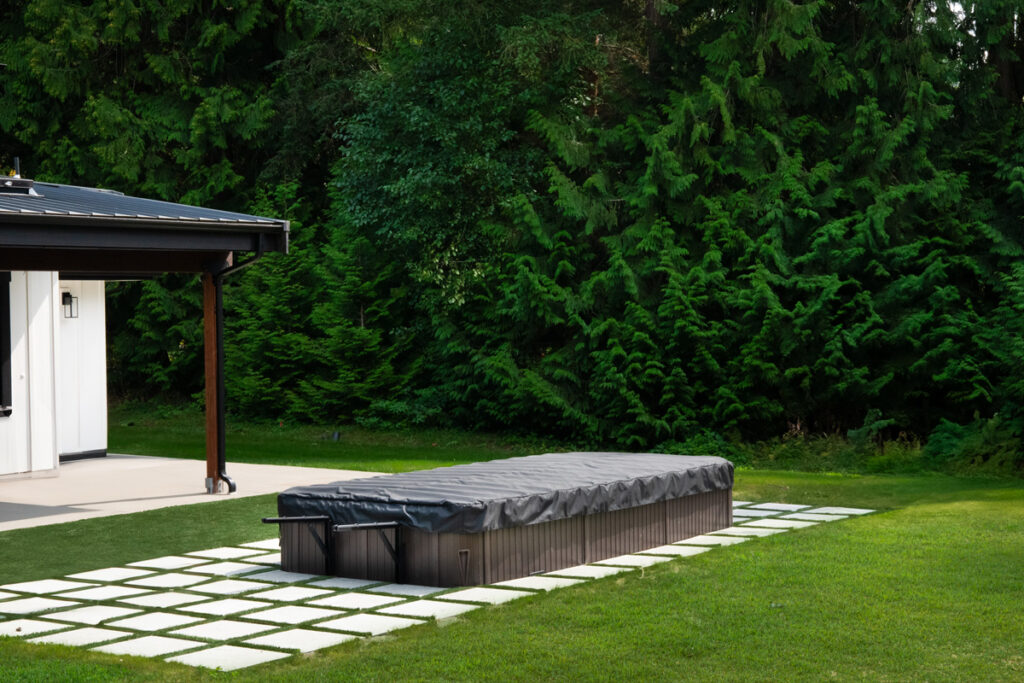
Dealers consistently highlighted the smoothness of the motion, structural rigidity and continuous seal design, and many noted the clean aesthetic and compact rear storage configuration as strong showroom advantages.
Equally important, Thompson says, is Core Covers’ North American production footprint. Domestic sourcing supports trade compliance, reduces tariff exposure and provides more predictable lead times for dealers.
Looking ahead, the timing may prove strategic. With record spa production in 2020 and 2021 and an average cover replacement cycle of 5.2 years, 2026 and beyond represent a significant demand window.
“The Rolling Spa Cover represents our broader direction: modular design, serviceability, superior materials like WeatherShield and verified safety compliance,” Thompson says. “It’s not just a new SKU; it’s a platform innovation.”
At a Glance: Rolling vs. Bi-fold
traditional bi-fold
- Requires lifter
- Fixed hinge point
- Full replacement typical
- Heavier over time
rolling spa cover
- One-person operation
- Distributed support ribs
- Component-level serviceability
- 25% lighter surface