Engineering the Industry
From energy standards to safety codes, Angelo Pugliese leaves a lasting mark
Many people in the hot tub industry come to it through family businesses or early career opportunities.
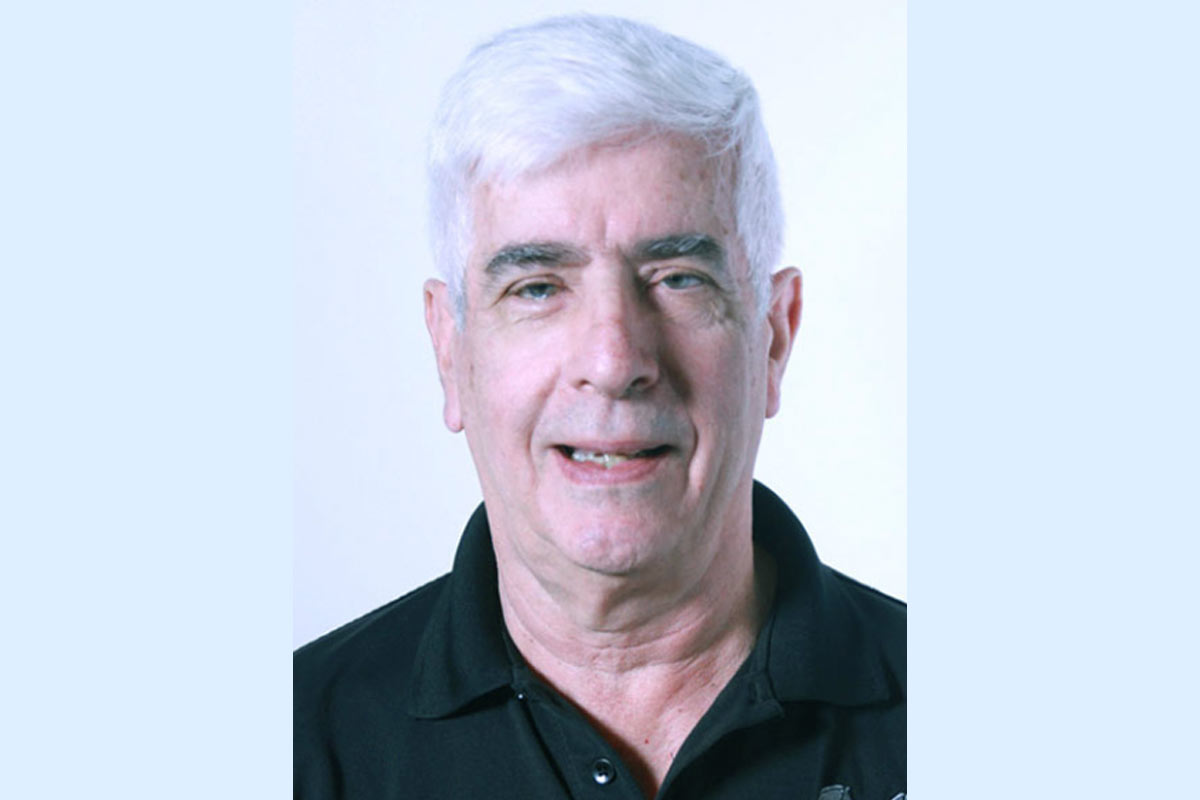
Others, like Angelo Pugliese, who recently retired as senior engineer for Custom Molded Products in Atlanta, had a different path. “I needed a job!” he says with a laugh.
“Angelo is a rare talent who possesses both the technical precision of a world-class engineer and the foresight of a true industry visionary. During his time at Dimension One and CMP, he was never just a competitor or a supplier. He was a vital collaborator who helped our industry ‘see over the forest’ to find a clear path forward. His leadership during the initial CEC energy regulation challenges was instrumental in turning impractical mandates into workable standards that ultimately led to the PHTA-14 standard, which CEC has since adopted. On a personal level, Angelo’s wisdom and integrity make him the kind of leader people naturally stop and listen to. We haven’t just lost a brilliant engineer to retirement; we’ve lost a cornerstone of our community. I am deeply grateful for his partnership and even more for his friendship. Going to miss you, buddy.”
Nathan Coelho, vice president of engineering, MasterSpas;
chair, IHTA Engineering Committee
The job was as a senior engineer with Dimension One Spas in Vista, California — a new field for him that would turn into a career spanning more than 25 years.
After Dimension One closed, Pugliese joined CMP in 2012. Although he had management experience, he preferred hands-on engineering work. “I enjoyed fixing problems and working on new ideas,” he says. “That’s what kept me going with it.”
Alongside his full-time roles, Pugliese spent more than 20 years involved in industry standards work, including with the Engineering Committee of the International Hot Tub Association, an affiliate of the Pool & Hot Tub Alliance (formerly the Association of Pool & Spa Professionals). The committee focuses on technical standards, safety regulations and industry advocacy. Pugliese says moving from a spa manufacturer to a parts supplier gave him a broader perspective for committee work.
While at Dimension One, Pugliese was deeply involved in engineering committee efforts through APSP and later IHTA when California moved to enforce its stringent energy requirements for spas (Title 20). “I knew what they were proposing was not going to work,” he says.
What followed remains one of his most memorable projects. “APSP made contact with some professors at California Polytechnic State University at San Luis Obispo, and we set up three hot tub test labs and tested a variety of offerings from the industry,” he says. “We were able to demonstrate to California, and its energy consultants, that if they enforced the standards they were talking about, it would eliminate about 90% of the spas on the market. So, they backed off somewhat.”
Working alongside the CEC, they wrote APSP-14 2014 Standard for Portable Electric Spa Energy Efficiency and influenced them to accept it as the standard, Pugliese says.
Thirteen states and the District of Columbia adopted APSP-14 2014, and 11 of them and D.C. have also adopted the 2019 edition, according to PHTA.
Pugliese’s other work includes involvement with the UL 1563 Spa Safety Code and serving on the writing committee for APSP-16, the safety standard for suction outlet fitting assemblies in pools and spas, which set requirements for drain cover materials, testing and flow rates to prevent entrapment. This became a federal standard incorporated into law through the Virginia Graeme Baker Pool and Spa Safety Act.
Along the way, he was recognized with two industry awards: the APSP Eagle Award in 2008 for his work in presenting the association’s hot tub position on California’s Title 20 energy efficiency standards, and PHTA fellow in 2019 for his professional accomplishments and contributions to the industry.
Pugliese says there is still more work to be done, particularly with establishing a uniform standard at the federal level, rather than dealing with differing standards state-by-state. He encourages those in the spa industry to volunteer for PHTA committees, as “that’s what drives the industry, keeping all the companies on the same page and having a unified voice,” he says. “You can look back and say, ‘I made a difference to the industry and the economy.’ ”