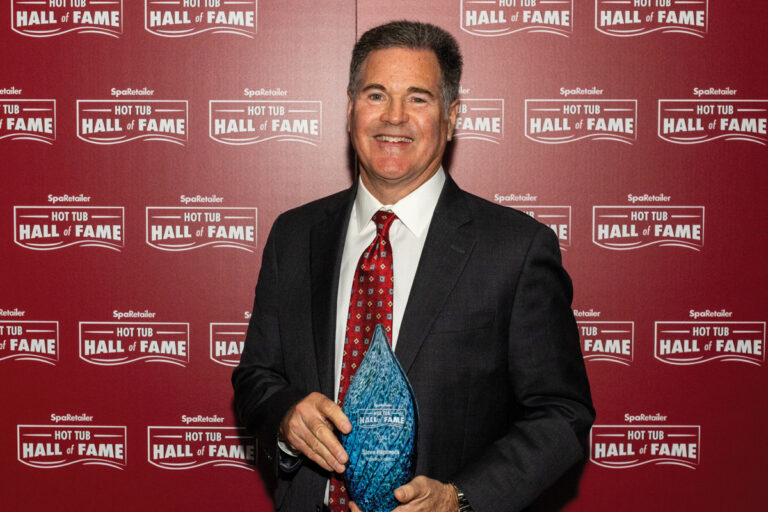
Joe King
From a basement office to one of the most influential water-care innovators in the hot tub industry

In the ’70s, hot tubs were more of a curiosity than an industry.
In the fall of 1978, Joe King was in southern England, studying business marketing management and trying to imagine a future that didn’t automatically lead to his family’s company in Minnesota.
Back home, his father, Lloyd King, had spent years in the swimming pool construction and service business, inventing solutions when he couldn’t find what he needed. As the early spa market formed, Lloyd identified a gap: There wasn’t a properly sized bromine feeder built specifically for hot tubs and smaller spas.
After Great Lakes Chemical Company told him it would buy 20,000 units if he built them, Lloyd moved forward, financing the tooling with a second mortgage on the family home.
And then, “They nullified the deal,” Joe King says. “They said, ‘We think hot tubs are going to be a fad.’ ”
From England, Joe didn’t immediately grasp the full weight of the situation. His parents flew overseas to see him, and what followed was not a dramatic ultimatum but a steady, persistent conversation, particularly from his mother.
“My mother — she’s got great sales ability — put a close on me,” King says.
“I really didn’t want to do it,” he says. He had envisioned working for a large corporation, gaining structured experience and building a career on his own terms. But once he understood what was at stake, the decision shifted. He agreed to give them a year after finishing college.
King Technology was founded in 1979.
‘You sell them, I’ll make them’
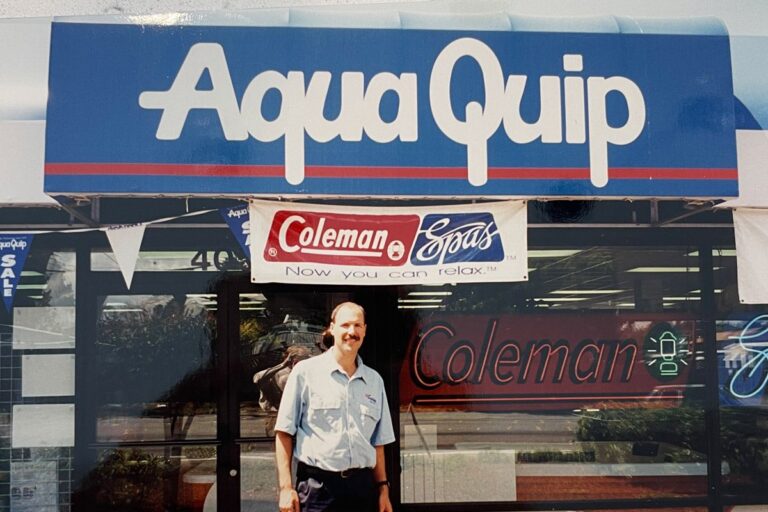
When King came home, there was no polished business plan waiting for him. The office was in the basement of the family home — one desk, two chairs, one phone. The product existed, but there was no marketing infrastructure, no distribution network and very little cash.
“I said, ‘So how is this going to work?’ ” King remembers asking his father. “And he said, ‘Well, you sell them, I’ll make them.’ ”
There would be no salary. “We really don’t have any cash flow yet,” King recalls being told. Instead, they worked out a different arrangement. King wanted a car and a credit card — the tools he needed to get in front of customers.
“I always loved Porsches,” he says, but knowing that was out of reach, he went for the next best thing: a midnight blue Mazda RX-7. His proposal to his father was simple: “If you lease that car for me, and get me a credit card, I’ll hit the road.”
Within weeks, he was driving west.

Learning the market one city at a time
King’s early sales strategy was equal parts improvisation and endurance. He would enter a city, find a phone booth, flip to the Yellow Pages under “hot tubs” and tear out the relevant pages. From there, he studied a gas station map, plotted addresses and built a circular route to visit dealers.
The bromine feeder he was selling was not yet an industry staple. Dealers were still assembling hot tubs in backyards, building decks around them and learning the category as they went. King needed to explain not just what the feeder was, but why it mattered.
In Denver, he met Linda Gentry, a bromine distributor who ordered 100 units, which confirmed that someone in the market understood the need.
From there, he moved through Utah, New Mexico and into California. In Los Angeles, he stayed with a high school friend for two months, sleeping on a couch while working up and down dealership hot spots like Beach Boulevard, where hot tub dealers seemed to open weekly. The approach paid off; he secured roughly 250 orders and called home to Minnesota to tell his father, “You would not believe this — crank up the presses.”
The road was exhausting and clarifying in equal measure. Cold calls forced him to ask better questions. “Cold calling is some of the best training,” King says. Gradually, he began to understand not just how to sell a product, but how dealers thought about inventory, margins and repeat sales.

From dealer add-on to engineered system
One of the early inflection points came with PWP, a major California distributor.
When King first presented the product to master buyer Don Cotton, the response was direct: Create demand first. “You create the market, and then we’ll bring it in,” King recalls him saying.
So King returned to the field and did exactly that, building dealer orders across PWP territories. Weeks later, Cotton called back with an order for 100 units at each of PWP’s locations — roughly 800 in total. Before relaying the numbers, Lloyd delivered Cotton’s first message to his son: “Well done, young man,” King remembers.
The order exposed a new challenge because demand now exceeded production capacity. It was time to head home. The sales strategy had proven itself; scaling the operation was next.
Back in Minnesota, King’s role expanded quickly. He was no longer just making calls; he was helping shape the product, the packaging and the broader strategy.
The original bromine feeder solved a specific problem, but King began to recognize its limitations. “It was kind of a one-trick pony,” he says. The long-term value lay not only in the feeder, but in the chemical sales that followed.
That led to the creation of the “Hot Kit,” a bundled system that included the feeder, bromine and instructions — everything a dealer needed to deliver a functioning sanitation setup from day one.
King Technology was no longer simply selling a component; it was positioning itself as a systems company.
Meanwhile, the industry was changing. By the mid-1980s, manufacturers were producing portable spas instead of just shells.
“There was a market shift,” King says. “It was moving from what was happening in the backyard to what was happening in the factory.”
“I’ve got to start calling on these factories,” he recalls thinking.
Manufacturers resisted. Adding sanitation systems increased cost, and many believed consumers could manage water care manually. King heard the objection repeatedly — that people could simply throw chemicals in by hand.
For him, sanitation was not an accessory; it determined whether the customer enjoyed owning a hot tub.
“Can you imagine buying a car that doesn’t have a gas tank?” he asks.
King Technology began developing integrated delivery systems designed for factory-produced spas, improving installation and consistency while protecting proprietary technology. Innovation became central to the company’s identity. “He would say to me, ‘Let’s focus on the things that are impossible,’ ” King says of his father’s influence.
That philosophy carried into formulation work. Rather than competing purely on commodity chlorine, the company invested in differentiated chemistry and eventually secured EPA registrations for multiple products.
FROG is born
As the company expanded its integrated systems and chemistry portfolio, it found a more refined identity. The FROG brand became the public face of that effort.
The name stood out because it was memorable and disarming in a category often defined by technical terminology. It made sanitation feel less clinical and more approachable for spa owners.
Gradually, FROG became closely associated with the company’s mission statement: “Water treatment rock n’ roll through radical invention, unique delivery and Star Wars ingredients.”
The phrasing signals a willingness to be different, highlights the emphasis on developing products others had not attempted, explores how the chemistry actually gets into the spa and captures the commitment to differentiated chemistry rather than commodity formulations.
Only later did the name take on an additional layer of meaning inside the company. Mary King, Joe’s wife, pointed out that FROG could also stand for “Fully Rely On God” — which resonated with King’s deep personal faith.
For King, the phrase captured something that had been true long before it was articulated. Building the company required him to fully rely on God, not only in moments of crisis but in daily decisions about risk, hiring and direction.

Leadership, faith and a different kind of succession
The ownership transition from Lloyd to Joe did not unfold according to a careful plan.
“There was no planning to bring me into the business, and there was no planning for the exit either. Zero,” King says.
When Lloyd stepped away, responsibility shifted quickly and without much structure. The strain — operational and personal — landed squarely on Joe and Mary and left a lasting impression.
Faith has long been part of King’s life and business decisions. He recalls praying with Don Cotton during early distributor meetings, long before the company was stable. He speaks of key hires and turning points not as coincidence, but as provision. Reflecting on CEO Mike Noer’s arrival decades later, King says, “We would say he was brought here by the Lord because it was the perfect timing.”
For King, responsibility is tied to stewardship, which, to him, means recognizing that the business is entrusted to you by God, not something to treat casually.
He often returns to a lesson from his uncle, also a business owner, who paid cash for personal postage stamps rather than charging them to the company. A small act, but to King, it reinforced something larger: Stewardship shows up in details. Leadership is watched. Integrity compounds.
Those convictions informed how he approached the next transition.
When his sons, Alex and Carson, began considering the business, King was determined it would look different. Structure replaced improvisation. Preparation replaced assumption.
Both sons gained outside experience and earned advancement elsewhere before joining the company, bringing with them structured corporate experience that Joe had once wanted but never received. Neither stepped directly from school into the family business. Each spent years building credibility in other organizations before returning.
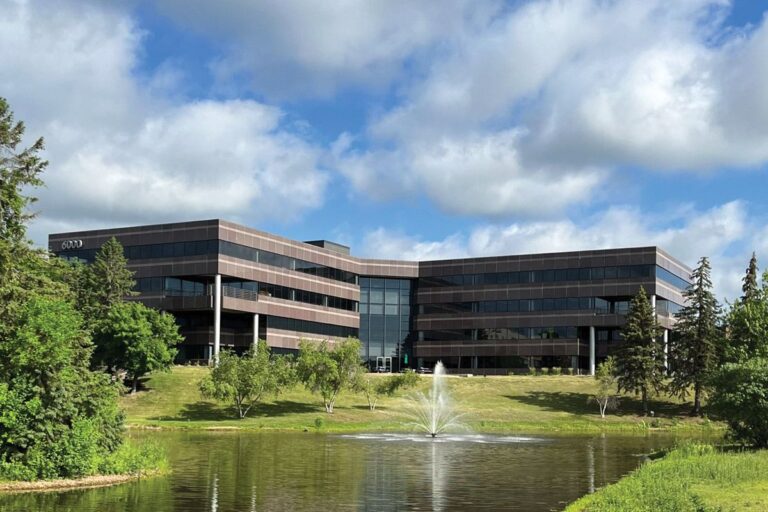
In succession planning conversations, the family was candid about the responsibility ahead. The company was no longer a basement operation; it was an innovation-driven manufacturer integrated into an estimated 50% of factory-built hot tubs across the industry. They did not assume they were ready. They wanted to be.
In 2024, Joe stepped away from day-to-day operations and now operates primarily at the board and strategic level, , while Carson serves as vice president of operations and Alex as vice president of sales, with Mike Noer and other experienced executives.
“We are a company that’s innovating water wellness and enriching lives,” King says. “It’s become a significant brand in our industry.”