Finding Sleep Again Through Warm Water
How hot tub use promotes better, deeper rest
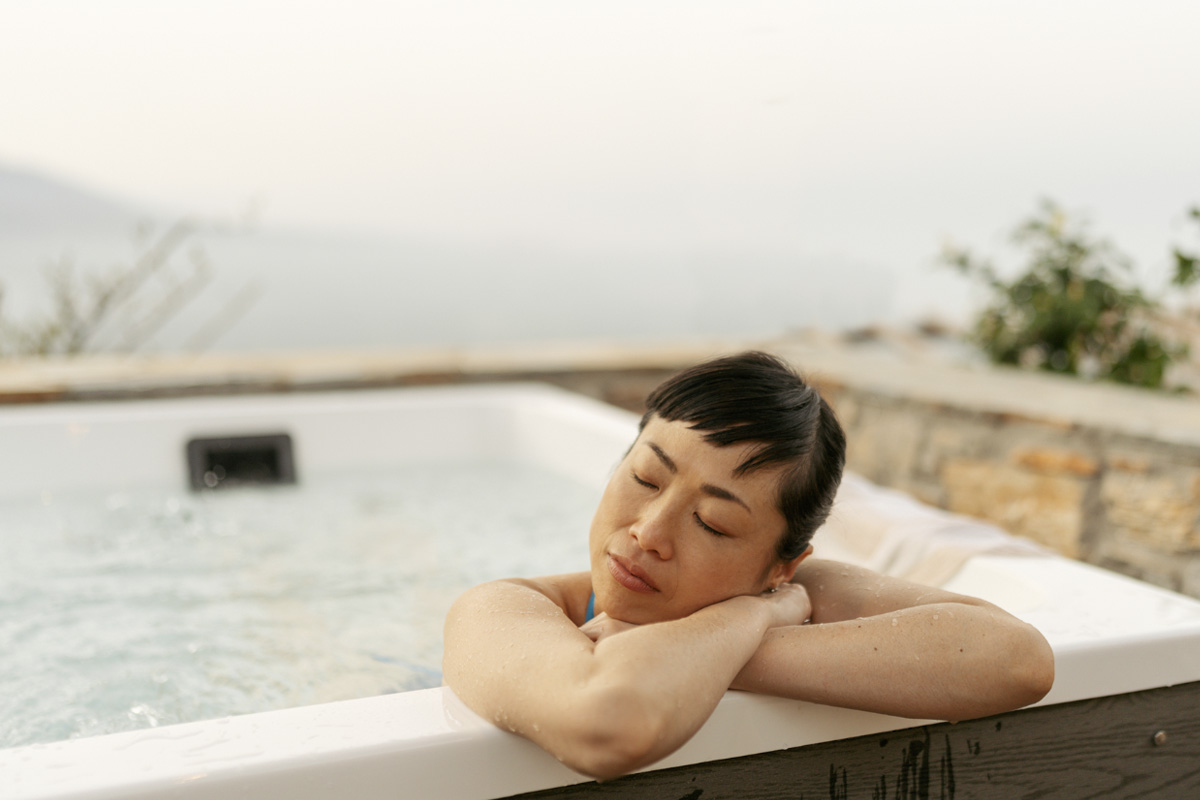
I had just returned from a vacation overseas where the time zone was nine hours ahead, and I was really struggling. My body felt stuck somewhere between night and day, my eyes were heavy but my mind refused to shut off and the sleep I managed to get was restless at best. No amount of coffee helped me power through the fog. It was the kind of jet lag that reminded me just how fragile — and how essential — sleep really is.
Then I remembered something my jet-lagged brain had forgotten: the game-changing effect of soaking in a hot tub. The warmth was comforting and the buoyancy eased my tired muscles in the moment, but the real transformation came later that night when I slipped into bed and, for the first time in days, fell into a deep, restorative sleep.
The science behind this simple ritual explains why it works so well.
A natural temperature reset
When you sit in warm water, your core body temperature rises slightly. When you step out, your body begins to cool, and that cooling process sends powerful signals to the brain, mimicking the natural drop in body temperature that happens when your circadian rhythm prepares you for sleep.
Matthew Walker, professor of neuroscience and psychology at the University of California, Berkeley, explains: “Your body needs to drop its core temperature by about two to three degrees Fahrenheit to initiate sleep. That’s why a hot bath or soak can actually help you fall asleep. The heating up and cooling down accelerates that natural process.”
Relief for muscles and joints
There’s also the power of buoyancy. In water, the effects of gravity on joints and muscles are dramatically reduced. For someone like me, carrying travel fatigue and tension from long flights, that weightlessness makes a difference. Pressure eases, muscles unclench and the body gets the message that it’s safe to relax.
“The body needs to feel physically safe in order to surrender to sleep,” sleep researcher Sara Mednick says. “When the muscles let go, the nervous system can follow.”
Lowering stress hormones
Soaking in warm water doesn’t just calm the body; it changes chemistry. Research in the Journal of Physiological Anthropology has shown warm water immersion can reduce cortisol, the stress hormone most often blamed for restless nights. High cortisol keeps the brain in “alert” mode long after the day is done.
Warm water also encourages the release of endorphins, the natural mood elevators that ease anxiety and promote calm. That combination gives you lower stress hormones, higher calming chemicals and is a recipe for deeper, more restorative sleep.
Supporting the body’s internal clock
The circadian rhythm, often called the body’s internal clock, governs everything from energy levels to digestion to sleep. Travel across time zones, late-night screen time or chronic stress can throw it off balance, but a warm soak before bed acts almost like a reset button.
A 2019 study from the University of Texas at Austin found that people who took a warm bath or soak one to two hours before bed not only fell asleep faster but also reported better sleep quality.
That night, after just 20 minutes in the hot tub, I slept. Not the light, broken sleep I’d been getting, but deep, peaceful, uninterrupted rest. I woke the next morning (and not at 2:30 a.m.) clearer, calmer and feeling like my body had finally caught up with itself.
In a world full of gadgets, apps and prescriptions promising better sleep, sometimes the answer is profoundly simple: warm water. Immersing yourself in warmth, letting tension dissolve and allowing your body to follow its natural rhythms is a remedy as old as time and one that modern science continues to validate.
I hope my story is a reminder of the power of hot tubs and their incredible effects on our bodies and sleep. Too often, we treat sleep like a commodity — something we can bargain with or sacrifice to keep up with the pace of life. We are busy. Life is busy. But it shouldn’t take returning from a well-deserved vacation and throwing our sleep patterns into chaos for days and weeks to realize how much we depend on rest.
A hot tub can be more than a place to unwind; it can act as a natural reset button. Just 20 minutes in warm water helps the body let go of tension, signals the mind that it’s safe to rest and gently guides us back to the rhythm we’re meant to follow.
In a world that constantly demands more of our time, that simple nightly ritual might be the most powerful gift we can give ourselves: balance, restoration and deep, healing sleep.
Sleep sells
When you explain how hot tubs help the body relax, reset and rest, customers see more value — and more reasons to take one home.
Why warm water helps you sleep:
- Core temperature reset: Warm water raises body temperature, and the cooling afterward signals the brain it’s time to rest.
- Muscle and joint relief: Buoyancy eases pressure, allowing muscles to release tension and promote full-body relaxation.
- Stress reduction: Cortisol levels drop while calming endorphins rise, creating the right conditions for deeper sleep.
- Circadian rhythm support: A soak before bed reinforces the body’s natural sleepwake cycle, making it easier to fall and stay asleep.