From Inquiry to Install
What successful retailers do between hello and handoff
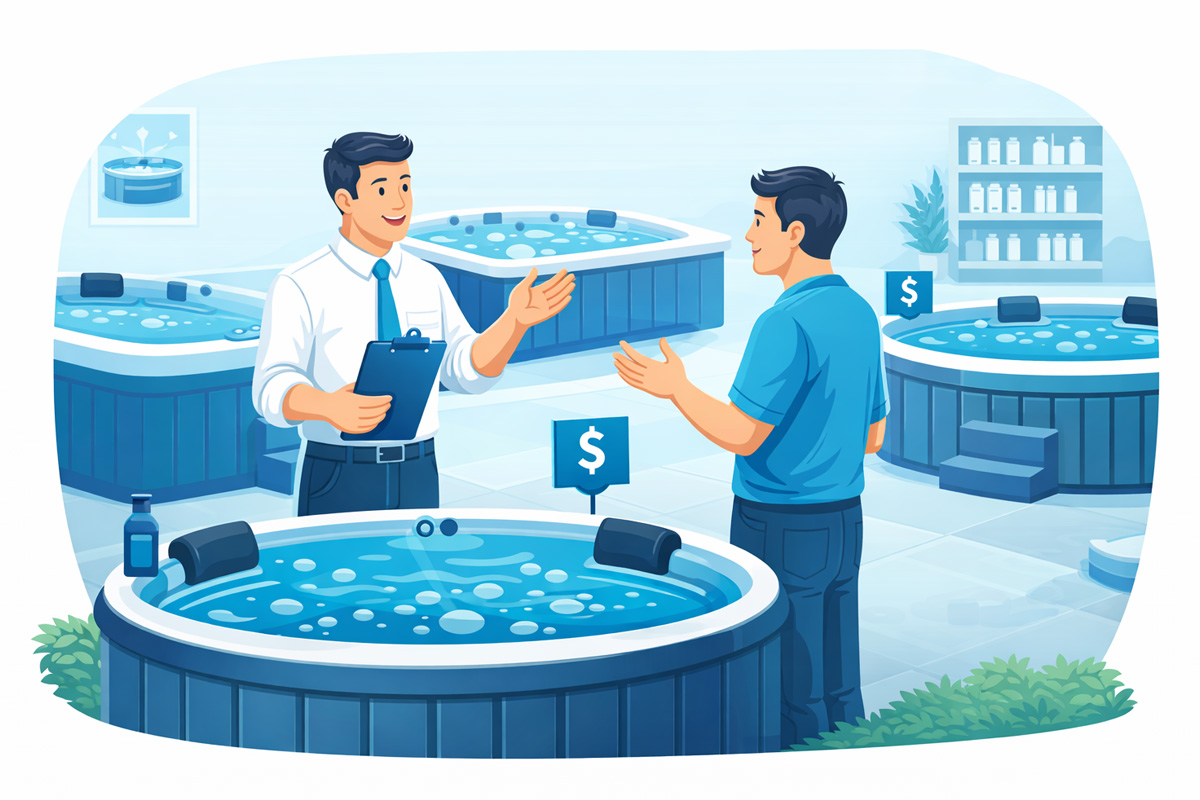
What happens before the final payment makes or breaks the sale. Retailers who actively listen, ask thoughtful questions and exceed delivery expectations will earn the sale while building a flourishing reputation.
Here’s a look at what successful hot tub retailers do between that first hello and the signed contract.
Snagging leads
Striking while interest is high plays a big role in lead conversion. Whether that’s online, in person or over the phone, it’s all about following the customer’s lead.
On Great Bay Spa & Sauna’s website, customers aren’t forced to input both phone and email — they can choose one or the other, giving them the power to decide how they want to be contacted.
Within five minutes of an online inquiry, a team member connects with that customer. Often, that may mean texting. Jessica Steneri, sales manager at Great Bay Spa & Sauna, says her team has “leaned into texting” as a lead connection technique, especially for online inquiries.
“Walking into a store or answering the phone is scary to people, so a text message is a little bit less intrusive,” she says. “You’re more likely to get an answer from someone today [with texting].”
Steneri adds that her team also follows up calls with a text message. A typical lead flow may start with a call in the morning, then a text and by the end of the day, if there’s no response, a sales rep will email. Her team uses Birdeye and SimpleChat for customer management systems to help keep communications organized so employees can tag team as needed.

At Seven Seas Pools & Spas in Pennsylvania, there’s a dedicated online sales employee who responds to customer online inquiries within 60 seconds. All leads go directly to that employee’s phone, and he’s trained on every aspect of the website, so if he’s not near a computer, he can comfortably answer any customer questions about the website content.
Ron Perkins, owner of Seven Seas, built that role intentionally. Rather than dividing digital leads among multiple salespeople, he created a dedicated in-house position focused solely on online traffic. The team tracks response times monthly, treating speed as a measurable performance standard, not just a goal. That structure ensures online prospects receive the same consistency and care as walk-in shoppers.
Online inquiries typically require patience before an in-person visit.
Perkins has found online prospects need about 10 touchpoints via text before considering an invite into the showroom or a phone call.
Being too eager to connect in person can scare off potential customers, Perkins says.
“It shuts the conversation down,” he says. “They’re not there yet. If they were, they would have shown up at your store.”
For walk-ins, experts recommend letting the customer lead the way. A quick greeting and introduction before browsing gets them comfortable with shopping, says Westin Runnels, regional manager of Southern Leisure Spas & Wellness in San Antonio, Texas.
“Letting the customer browse takes some of the pressure off the interaction,” Runnels says. “Our goal is to help establish a welcome and comfortable atmosphere.”
Educating without overwhelming
Sometimes, potential customers don’t realize the variety of hot tubs available. Helping them discover what they need versus selling them what they don’t lets them walk away feeling more confident that they’re working with the right retailer.
“The biggest thing I ask our team to do when someone comes in is to make sure they know we’re a resource,” Steneri says. “We want you to feel educated before you make a decision.”
When a customer enters a showroom, they’ve typically researched what they think they want to buy.
I let the customer’s curiosity guide the discussion. I remind myself that silence is valuable. Rather than overexplaining, I create space for the customer to ask questions naturally.”
Westin Runnels, Southern Leisure Spas & Wellness
“I let the customer’s curiosity guide the discussion,” Runnels says. “I remind myself that silence is valuable. Rather than overexplaining, I create space for the customer to ask questions naturally. I’m always happy to answer anything they want to know, but I let them lead with what matters most to them.”
So, how do you balance educating the customer without overwhelming them? Steneri says it’s about making the experience more like a consultation.
“You know you like a hot tub. Great. What’s your goal for the hot tub?” she says. “You humanize it a bit more when you ask, ‘What are you doing for pain management? What are you doing to take care of yourself?’ It makes people stop and think.”
While accessory shopping is fun, it’s not important to add those details into the early sales conversation, Steneri says, because it can potentially overwhelm customers and lead to analysis paralysis. Instead, show the customer one or two models based on their initial feedback, she says.
Active listening plays a huge role in successfully leading customers to the perfect spa fit. Once a salesperson has identified the pain point — whether it’s literal pain or simply a need to relax and connect with family — it’s easier to narrow down options.
“We’ve really had to retrain our brains to get back to how we identify why they’re here,” Perkins says of the exploratory stage of selling. “We’re going for what reasons they’re here first. Why are they thinking about a hot tub, sauna or pool?”
When prospects ask about maintenance, Perkins says preparation matters. Train sales staff to confidently explain maintenance.
He emphasizes simplifying internal training so staff can clearly present one primary maintenance system rather than overwhelming customers with multiple chemical options. Clean internal processes translate to cleaner presentations.
Perkins also lets prospective customers know they can keep learning well after purchase. He invites them back to his store for weekly water testing, where his team can continue to educate buyers, so they feel confident in their purchase
Handling objections
In sales, customer objections can be as long as laundry lists.
“It’s more expensive than I thought.”
“We don’t have a concrete pad yet.”
“I don’t know an electrician.”
“Will it fit?”
One way to reframe price concerns? Help the customer see the full investment over time and remind them they’ll be taken care of, Runnels says.
“There is real value in being able to come home after a long day to unwind,” he says. “Just as important is the consistent performance and reliability of a quality-built hot tub. A customer’s hard-earned money is not going to just a hot tub; it’s going to consistent performance, comfort and premium customer care.”
Having connections with electricians and concrete workers removes friction and eliminates easy objections, Perkins says.
“When you can encompass everything that’s needed in the project, you’re always going to sell more,” Perkins says, especially if the competition isn’t offering it. “With that usually comes a bigger price tag. People are looking for ease.”
Knowing what the objections are and solving them before they show up is key to success.”
Ron Perkins, Seven Seas Pools & Spas
To eliminate those objections before they stall a sale, Perkins staffs certified electricians. That allows his team to provide up-front electrical pricing instead of sending customers out to collect quotes. For retailers without in-house crews, he recommends building trusted partnerships and negotiating rates ahead of time so pricing is clear before installation day.
“Knowing what the objections are and solving them before they show up is key to success,” he says.
Perkins also believes in showcasing several price points. Filling the most expensive models on the sales floor is an easy upsell.
“It’s easier for them to see the benefits because they can experience it,” he explains.
Wet tests often help customers move up in series, especially when financing is discussed. During after-hours wet tests, he’s had customers soak and decide in as little as 10 minutes.
But the first person who speaks loses, Perkins jokes. In those moments, patience matters. When the customer is relaxed, he encourages salespeople to let the customer offer their insights first.
At his Cranberry Township location, customers can experience a private room where they wander into a “backyard” and stargaze at faux stars twinkling in the ceiling while crickets chirp nearby.
“They can close the doors, and it’s like they’re in their backyard,” Perkins says. “You’re creating a comfortable environment.”
Steneri adds it’s important to remember wet tests should be promoted regardless of sale size.
“Whether you’re [planning on] spending $5,000 or $50,000, we offer it to everyone,” she says.
Appointments aren’t required for wet soaks at her stores. For a customer who may have extra time on a random Friday, it’s an opportunity for them to take a soak without pressure. Her team also always has coffee, tea, water and other beverages on hand. It’s all about customer comfort, Steneri says, noting they close the door and let prospects have their privacy.
“We get a lot of giggles and people say, ‘Wow, this is really helpful. I didn’t think I would have the opportunity to do this,’ ” she says. “It’s like test-driving a vehicle. We have disposable bathing suits and towels, and it’s ready at any given time.”
The big finish
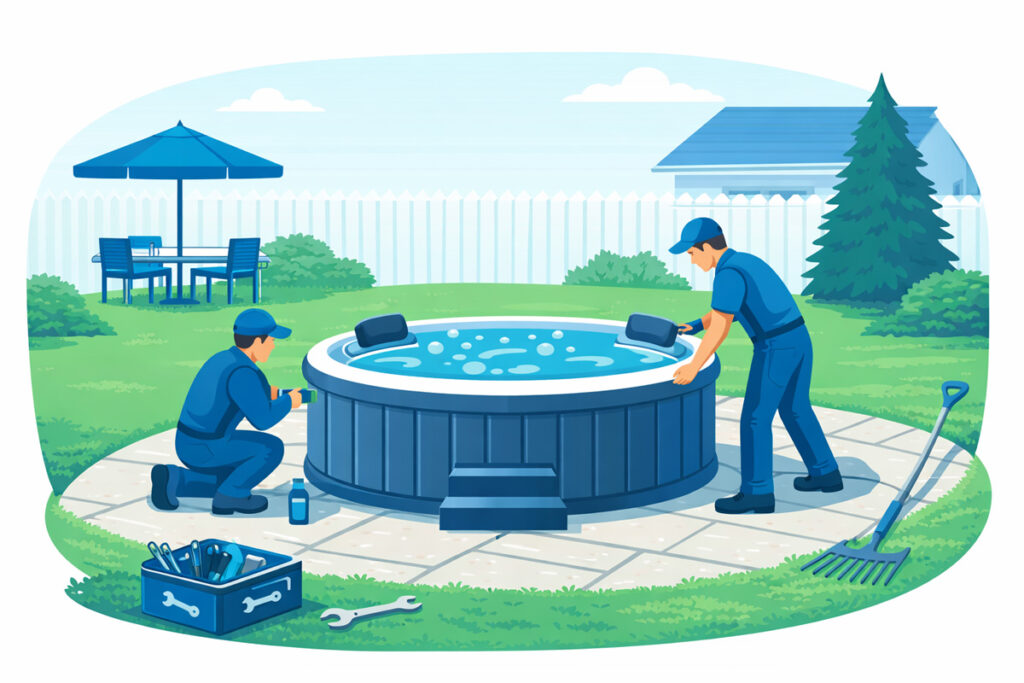
Once a customer decides, it’s time for the sales team to connect them with an equally impressive delivery team. This part of the process is where retailers can earn high praise, positive reviews and future referrals.
With the size of his company, Perkins realizes he’s lucky to have a dedicated service manager who handles everything. For smaller retailers, one simple way to create a five-star experience is to provide a contact sheet.
Perkins gives customers a detailed point-of-contact sheet listing every department — delivery, service and store management — along with direct phone numbers. That prevents customers from getting passed between departments or stuck in voicemail loops.
He also collects site photos before delivery through a dedicated email channel so his team can identify potential installation challenges in advance. Electrical panels, yard access and pad placement are reviewed beforehand to avoid surprises on delivery day.
Additionally, having on-hand reputable contacts for other hot tub install needs — such as concrete or electrical — further simplifies the process for the customer. The fewer bumps to install day, the better, Perkins says.
“If they can compare it to other services they’re getting at their home, and you far exceeded what the other services were, you make it easy for them to talk about it,” he says.
A “seamless process” will also make it easier for the customer to leave positive feedback and provide future referrals.
Perkins sends a gift of lush, monogrammed towels to customers as a thank you. Tucked inside the box are also referral cards. He says the customer’s initials offer a personal touch, but he also has his company’s logo on them because it’s built-in branding. That same box also offers a $500 store credit for referrals, too.
“Don’t be cheap on it,” Perkins says of customer gifts. “Get a nice towel. Send something to them that they’re going to want to use.”
And if a sale doesn’t go through? It often comes back to the exploratory phase.
“You have to make it easy for them to say yes,” Perkins says.
For many retailers, the sales process is about more than closing a deal. Runnels says the journey from first inquiry to final installation is where the real reward lies.
“When a customer walks into the showroom, I see it as an opportunity to help them find exactly what they’re looking for, or even better, what they’ve imagined for their backyard oasis,” he says. “Going from the doorbell chime at the showroom to the doorbell chime at the customer’s home for their spa delivery brings me a lot of joy.”