The Jacuzzi Legacy
Innovation born from necessity
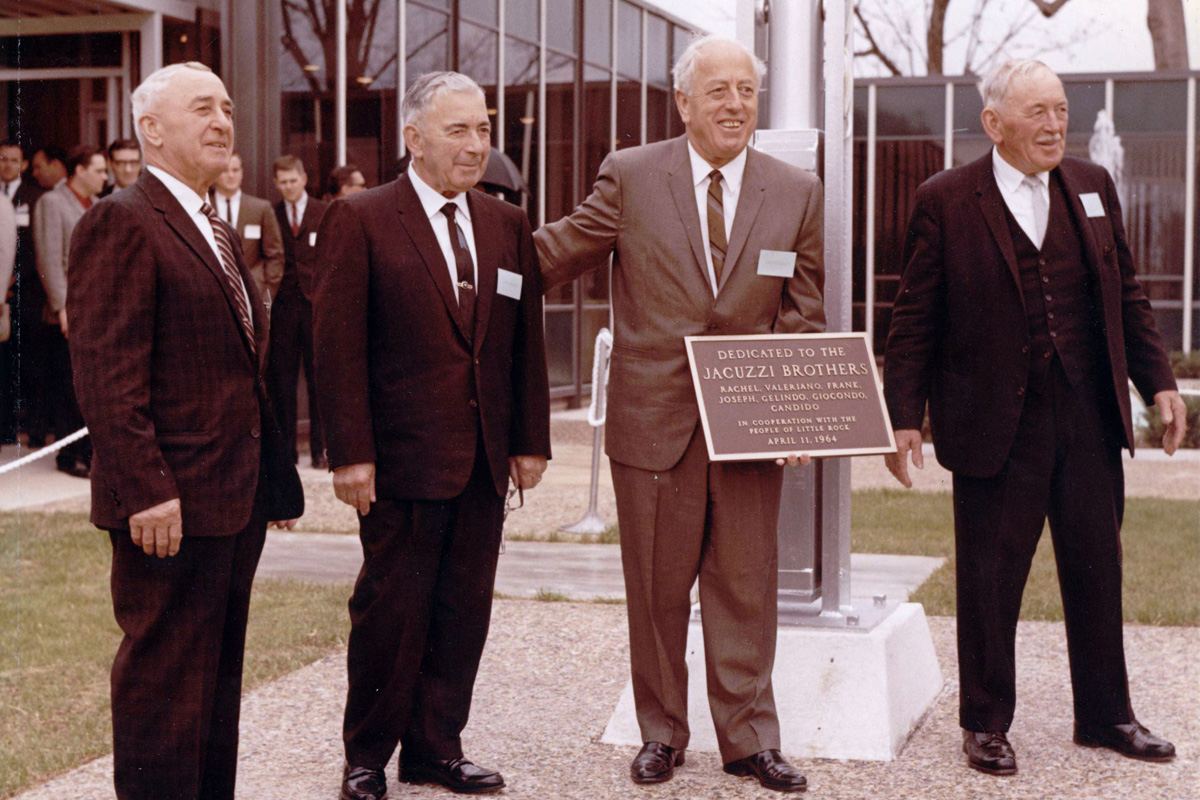
The Jacuzzi name came from humble beginnings. What started as a family of inventors passionate about aviation and machinery evolved into one of the most iconic names in wellness.
In the early 1900s, the eldest Jacuzzi brothers, Valeriano and Francesco, left their hometown of Casarsa della Delizia in northeastern Italy in search of opportunity. Facing political unrest and economic hardship back home, they arrived in the U.S. in 1907 and found work in Montana and Idaho laying railroad tracks. Eventually, the rest of the brothers joined them: Rachele, Giocondo, Gelindo, Candido and Joseph. By 1910, the entire family, including six sisters, reunited in California.
They initially did seasonal agricultural work, picking fruit and harvesting crops. But their talents as machinists and inventors took them to Berkeley, where they opened a machine shop. The Jacuzzi brothers were tinkerers by nature. One of their most innovative contributions during this time was the development of the “Jacuzzi Toothpick,” a lightweight laminated wooden propeller that gained recognition for its performance and was used in military aircraft during World War I.
Their foray into aviation was brief but notable. In 1921, they designed and built the first enclosed-cabin monoplane, which gained national attention. However, tragedy struck during a test flight when one of their brothers, Giocondo, died in a crash.
“When he died in the airplane crash, the mother [Teresa] said, ‘That’s it. You’re done with aviation. You’re out of that business,’ ” Ken Jacuzzi, Candido’s son, said in an interview with the Jacuzzi company before his death in 2017. “And they were. The rest of the brothers listened to her.”
The family had a large almond orchard, and a lack of water compelled them to dig many wells. “My father and uncles built a pump that could lift water efficiently from the well for irrigation,” Ken said. “That pump worked so well, neighbors started asking if they could buy one.”
Knowing other farmers had this issue, the Jacuzzis began manufacturing the water pump. Its effectiveness spurred a thriving business across the water-starved San Joaquin Valley. It was this practical ingenuity that would eventually lead them into the wellness industry.
A father’s invention for his son
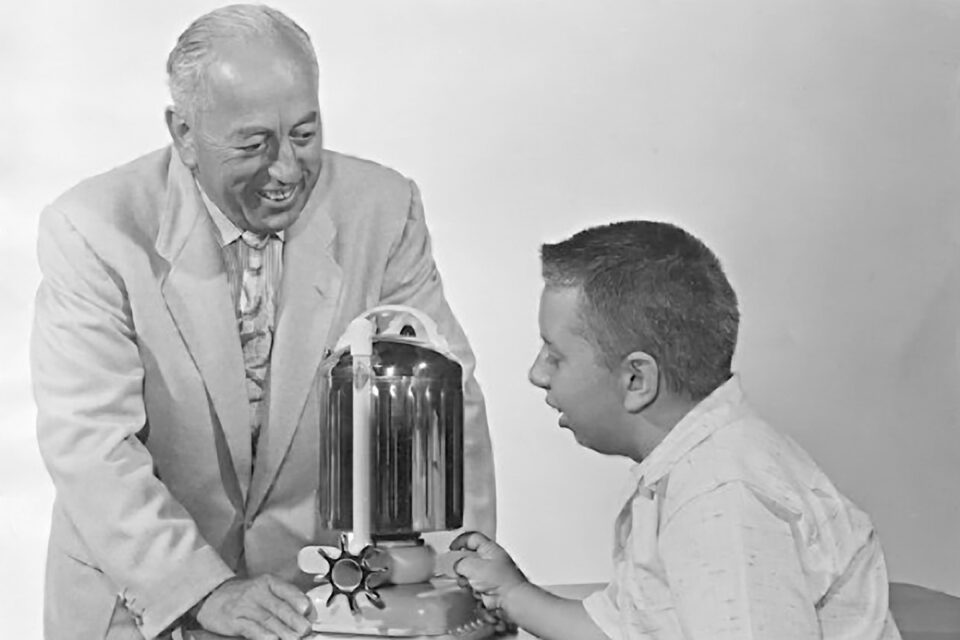
In 1943, young Ken Jacuzzi was diagnosed with systemic juvenile rheumatoid arthritis after a severe strep infection. “I was a healthy baby, but even in the 21st century, strep throat for an infant is a critical illness,” Ken said. “And it hit me hard. The strep throat evolved into rheumatic fever and then the rheumatic fever evolved into systemic juvenile rheumatoid arthritis, which affects the whole body, not just the joints, but the internal organs.”
Ken went through many treatments and eventually was prescribed physical therapy. But before his sessions, his doctor recommended hydrotherapy to help prepare his body. “My mother [Inez], who was the one that brought me to therapy regularly, noticed that I was indeed more comfortable, pain-free and flexible after the hydrotherapy,” Ken said.
But Inez was worried the travel to and from, and the cold weather in San Francisco, would cause a susceptible Ken to become ill again. She asked her husband, Candido, to create a solution that could bring the therapy home. Candido went to a session. “He saw the unit and said, ‘Geez, this is a pump for crying out loud. I could do that,’ ” Ken said. “And he designed a unit for our home bathtub.”
The J-300 replicated the hospital’s hydrotherapy sessions. “It gave me back some of the freedom I had lost,” Ken said. “I could finally get relief without leaving the house.”
“It’s not just about technology or design,” says Robert Baird, Jacuzzi’s current CEO. “It’s a story about human empathy — how a father wanted to ease his son’s pain, and how that need created an industry. We are standing on the shoulders of true inventors. The original Jacuzzi family wasn’t trying to start a wellness brand; they were trying to help people. That remains our North Star.”
Marketing meets momentum
Encouraged by Ken’s rheumatologist, the family began manufacturing and selling the portable pump, initially through medical channels. Despite internal skepticism about consumer products, the family launched a division of Jacuzzi Brothers, Inc. called Jacuzzi Research. Their J-300 pump, introduced in the 1950s, was a compact, portable hydrotherapy device that brought pain relief into homes. But marketing was the next hurdle.
Enter Ray Schwartz, a sportswriter with Hollywood ties, who secured endorsements from celebrities like Jayne Mansfield and appearances on the wildly popular TV show “Queen for a Day.” The show reached 20 million viewers, and “Jacuzzi” became a household name.
The Roman revolution
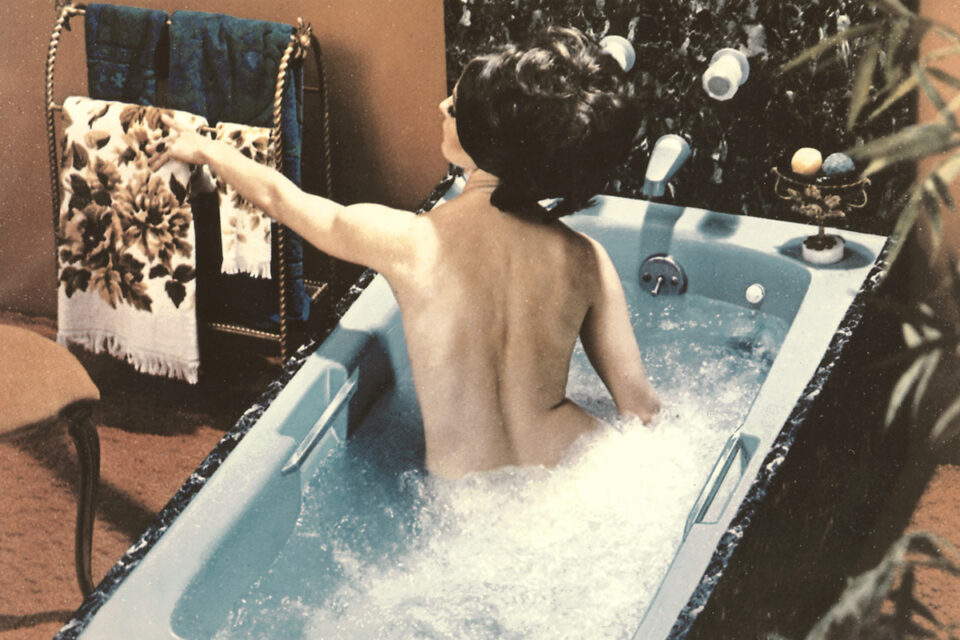
Still, it was Roy Jacuzzi, Candido’s grandnephew, who would redefine the company’s legacy. In 1968, at just 21 years old, Roy designed and launched “The Roman,” the first self-contained whirlpool bath. It integrated jets, plumbing and water circulation in a stand-alone unit — an innovation that laid the foundation for the modern hot tub. Roy’s flair for industrial design and consumer marketing helped expand Jacuzzi into a brand recognized globally for wellness, luxury and lifestyle.
“Roy made it aspirational,” says Erica Moir, who has worked in the company’s product development and strategy for over two decades. “He was the one who got us into magazines and celebrity homes. That was the difference. Suddenly, it wasn’t just a pump — it was a Jacuzzi. Roy had a vision for the consumer market that no one else saw at the time.”
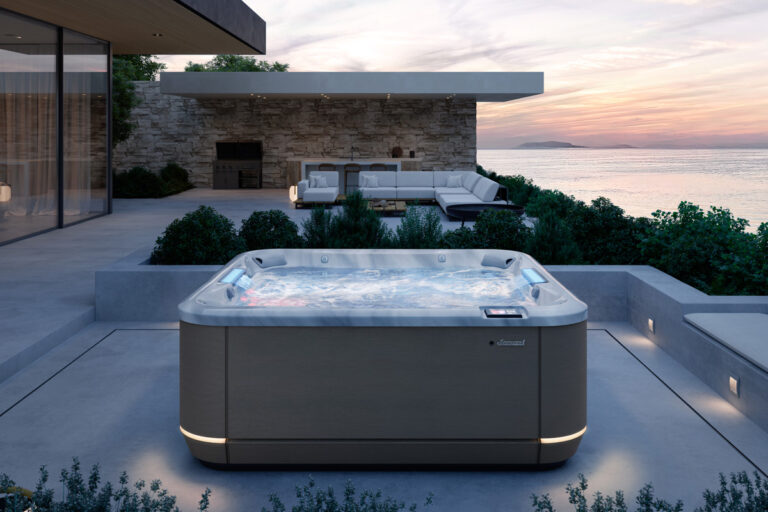
The Roman was just the beginning, and by the early 1970s, Jacuzzi was making portable hot tubs.
“Roy thought we could make it a luxury product … something for everybody, not just people who were sick,” Ken said.
Carrying the torch
Robert Baird, CEO of Jacuzzi Group, acknowledges that legacy but emphasizes the company never stood still. “Our innovation didn’t stop in 1968,” Baird says. “We’ve continued to push into new markets, new categories — whether that’s swim spas, smart technology or luxury wellness.”
The company’s ownership has shifted over the decades, moving from family hands to larger conglomerates, including acquisitions and spinoffs. Through all the transitions, the spirit of invention and wellness has remained. Today, Jacuzzi celebrates its 70th anniversary of the first whirlpool pump.
“It’s a valuable name,” Ken said. “It reflects on what the company built, of the family risking and sacrificing so much to immigrate to this country and going through so much, the ups and downs that are often common with entrepreneurs. It’s an amazing story and an amazing family.”