The Subtle Sell
Pairing spas with the products that complete an outdoor lifestyle
Sometimes a hot tub is … just a hot tub. You’ll gladly ring up the sale. Often, however, the spa becomes the centerpiece of a backyard living space and the starting point for complementary products that complete the experience.
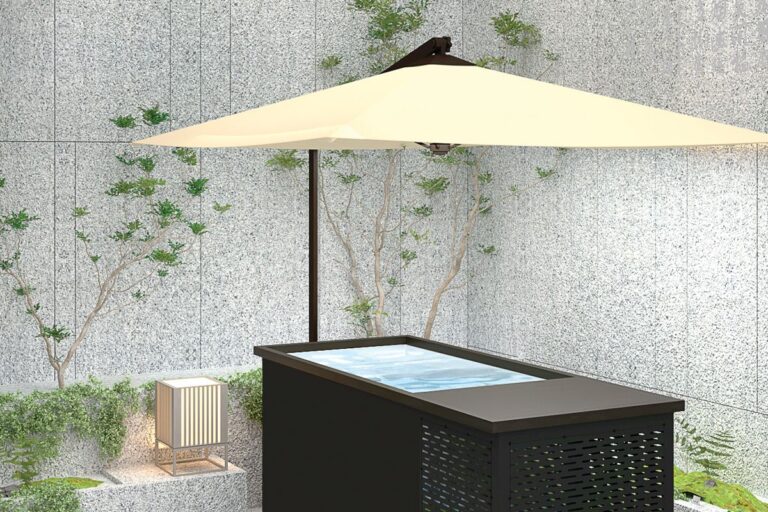
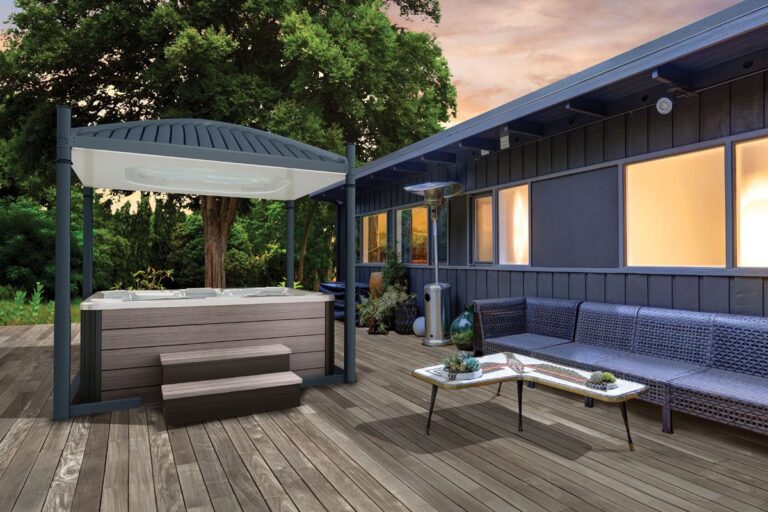
For retailers, cross-selling related items is an effective strategy. Bundling these products with a hot tub purchase not only increases sales but also gives customers more satisfaction and builds loyalty. Bundles can go beyond simple start-up packages (steps, railings and covers) to include Covana covers that act as gazebos, patio furniture and, for some retailers, cold tubs or saunas that tap into the growing contrast therapy trend.
The trick to successful cross-selling lies in timing and keeping the conversation focused on value rather than price alone. Success comes “in educating them about the value bundles offer,” says Mike Isley, a partner at Paradise LeisureScapes in Saskatoon and Regina, Saskatchewan, Canada.
Done right, the upsell doesn’t feel like an upsell at all — it feels like helping customers complete the backyard experience they envision.
The introduction
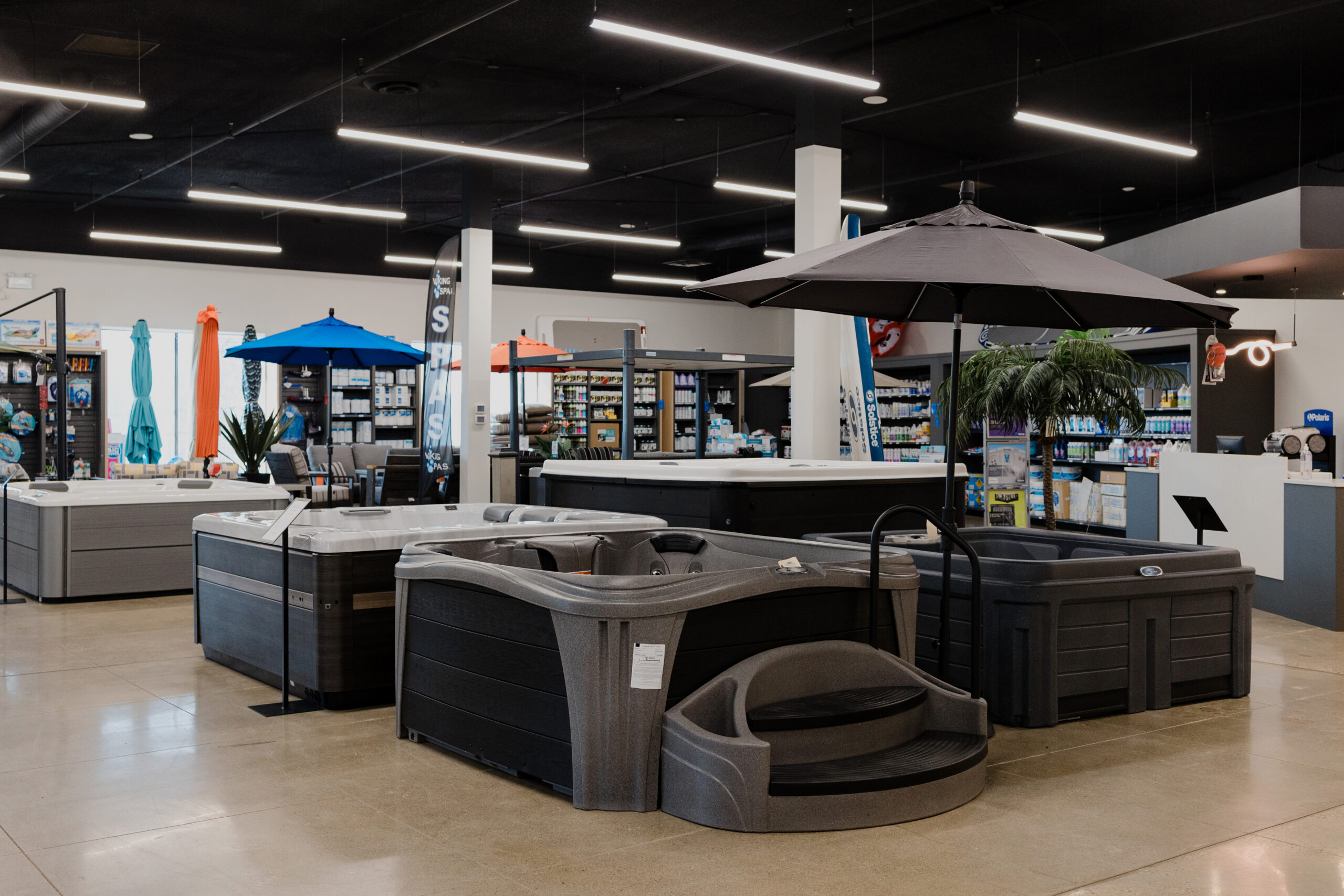
The process begins as soon as customers enter the showroom. “There are some passive introductions [to other products] as customers see displays when they walk through the showroom,” says Gunnar Graven, president of Steepleton, a home recreation retailer in Louisville and Lexington, Kentucky. These can be arranged as hot tub vignettes or by outdoor living categories that naturally resonate with shoppers.
“Vignettes are important, as they [avoid] the impression of just a hot tub on a slab in your backyard,” says Luke Crandall, operations manager for Backyard Pools & Spas, with three locations in Illinois.
Isley agrees that strong merchandising can help customers picture what’s possible. “When you come through the showroom and you see the lifestyle displays, it’s like, ‘Hmm, I can picture that at my house,’ ” he says.
And for many retailers, cross-selling extends beyond the initial purchase. Graven notes it doesn’t always happen in the same transaction. “The way our categories are set up is that we may sell the family a hot tub, and their 13-year-old wants a basketball goal,” he says. “As the family grows, our products grow with them.”
The conversation begins
Once you’ve engaged the customer, the soft sell starts early — usually within the first 5-10 minutes — when you’re learning what they want from the purchase, Crandall says.
“You want your customer to be emotionally committed to a hot tub, then go into hot tubs and the outdoor living [items] as well,” Crandall explains. “You’re not specifically saying you sell this or that, but you’re asking simple questions such as ‘Are you looking more for relaxation and entertainment, therapy usage or a mix?’ ”
With that answer, you can pick which products to mention later.
“If entertainment, what are some other products the customer might need? Maybe a stereo system,” Crandall suggests. “Or if privacy is a concern to them, you make a mental note, but you’re not introducing this until later in the conversation. You sprinkle it in. That shows the customer that you’re listening, you’re paying attention and you care for them.”
For Isley, an enthusiastic proponent of contrast therapy, the process typically starts about halfway through the conversation, once the customer’s interest in a hot tub is clear and cold tubs have been subtly hinted at.
Framing the value
The value of bundling can be expressed in several ways: savings, convenience and lifestyle enhancement.
To start, sales teams must stay on top of add-on availability, since hot tub customers often want immediate delivery. They also need to know what prebuilt bundles include and what can (or cannot) be added in a customized package.
Saving money is top of mind for many customers, and certain costs can be reduced, such as waiving delivery charges or taking advantage of supplier promotions.
With Paradise’s wellness bundle, “The more you buy, the more you save,” Isley says.
This ties into the convenience of purchasing everything from one retailer at the same time.
But Isley emphasizes that lifestyle comes first. When Paradise promotes wellness bundles, it doesn’t lead with discounts. “We don’t advertise about the money,” he says. “It’s simply about a lifestyle.”
That lifestyle value may be less about cost than helping customers complete the vision for their space. Paradise can even provide 3D animated designs, Isley says, allowing homeowners to see how products might fit together.
For some shoppers, the vision centers on wellness, particularly the health benefits of contrast therapy. This element often requires education about the science behind a cold plunge, hot tub or sauna.
lsley or his team will say, “Have you ever heard of this? Let me tell you about all the benefits.”
They avoid saying, “You should consider buying this; we sell this.”
This allows the customer to choose based on the facts — not just on cost — because even at that point, they may not realize financing is available, Isley says.
And if they don’t buy it, “there’s the future.”
The bottom line
Hot tubs are an investment for homeowners, and financing the purchase is a major decision. Adding complementary products is another. Spa retailers handle this potential obstacle with on-site financing options from lenders who offer favorable rates and flexible payment plans.
“It’s important to have financing available in-store,” Crandall says. While his company has many options, they focus on two, including one with the standard 0% APR for 12 months and another with custom monthly payments. “It only takes 5-10 minutes, and they either get approved or don’t get approved.”
Steepleton offers Wells Fargo financing options up to 72 months. “They can really spread the package out for a low monthly rate,” Graven says. The business carries a large inventory, which the sales team needs to turn over efficiently for quick delivery. “We push financing a lot to offer the customer a low-cost entry into the item, which will help us keep our margins,” he adds.
For Isley, financing isn’t upselling; it’s enabling the lifestyle value of both products, all of which can be financed, even with a no-payment-for-six-months contract.
“[Customers will think,] ‘If we do a bundle, I’m saving some money, and you’re offering financing, so I don’t have to pay for it all right away,’ ” Isley explains. That, he says, becomes manageable for people to say, “I never thought I would be able to afford a cold tub and a hot tub right now. But you made that available, and I got a better deal.”
That kind of satisfaction becomes its own marketing, Isley says — the word-of-mouth conversations that happen “through dinner parties, through all these different things.”
It’s another reminder that bundling, when done softly, isn’t about pushing products; it’s about creating an experience customers want to talk about.
the soft sell script
questions that open the door to bundles (without feeling pushy)
The best cross-sells don’t sound like sales pitches — they sound like curiosity. Successful bundling starts with listening first, then introducing add-ons as
natural solutions. Try weaving in questions like these early in the conversation:
Lifestyle and intent
• “Are you picturing this more as a place to relax, entertain or a little of both?”
• “Who do you see using the spa most often — family, guests or just you?”
Backyard space and setup
• “What does the area look like where you want the tub to go?”
• “Do you want it to feel open, or more private and enclosed?”
Comfort and convenience
• “Have you thought about steps, cover lifters or anything that makes entry easier?”
• “Would you prefer something that’s low maintenance day-today?”
Wellness and trends
• “Have you ever heard of contrast therapy?”
• “Some customers pair a spa with a cold tub or sauna — is that something you’ve seen?”
The key: Ask, note the answers and return to them later. Customers are more receptive when products feel like part of
their vision, not an extra item on a receipt.