The Right Step Up
How retailers can guide customers to a spa that fits their lifestyle — without overselling
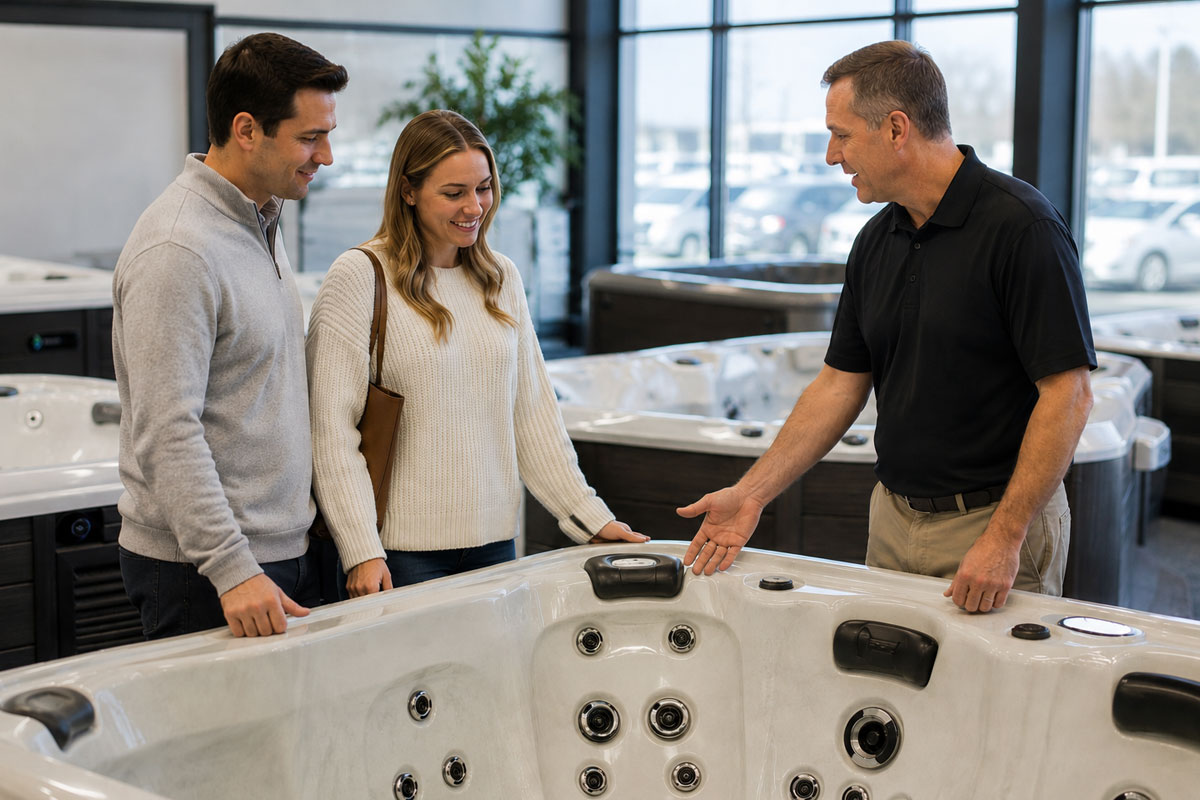
When a customer walks into a showroom, they usually have a vision of what they want and a budget they hope will buy it. The vision is vivid, and the budget is often set before they understand what a spa costs and which features will matter long after delivery day.
“Everybody comes in saying they want a $5,000 hot tub,” says Sky Matula, president of The Hot Tub Store in Northern California. “The reality is that the majority of them don’t want a $5,000 hot tub. They just don’t know how much hot tubs are.”
That is where the upgrade conversation begins. Matula and Cheyenne Mahncke, sales manager at Haven Spa, Pool & Hearth in Oregon, both start with discovery but differ in execution. Mahncke starts high and works down; Matula may start with the budget and work up. Different approaches, same goal: a spa that fits the customer’s life, gets used and feels worth the money.
“We go into a whole lot of discovery with each client,” Matula says. His first step is to find out why a customer wants a hot tub, who will use it and what they expect from owning it.
People are going to tell you what they need if you give enough time to listen.” Cheyenne Mahncke
“As you spend time with them, you’ll see what their pain points are and what’s important to them.”
The answers show what matters. Frequent users may value filtration, energy efficiency and water care. Therapy buyers need precise jet placement and seat fit. Rental owners often need a durable cover. The goal is to keep a bargain spa from becoming an expensive regret.
Mahncke starts at the top. “We try to sell top down,” he says. “Not everybody’s going to end up with a $20,000 spa.” His team begins at an elite-package display, then moves to models with fewer features. Starting at entry level, he warns, lets the first price tag anchor the conversation.
“It’s hard to start somebody with an essential package and work them up once they’ve already seen the price tag,” he says.
Top-down does not mean loading every extra onto the quote. Once the model is selected, Mahncke builds from its base package, adding accessories tied to the customer’s use. “I try to say this is why I feel like this would make sense for your lifestyle, for your particular needs,” he says.
While Mahncke shows customers what they could have, Matula gives them a reality check: what their budget buys. For that shopper, it means “this little tiny hot tub over here with the basic options.” He asks, “Does that fit the fantasy that you had?” If yes, stop. If not, move up to a nicer model.
Sometimes, Matula skips the spas and heads straight for the covers. New customers don’t think about the hot tub cover, but it’s an important part of the investment — a lesson repeat customers usually learn the hard way. Matula estimates customers may need several replacements over a decade at $1,000 each. “They’ve already bought four replacement covers,” he says. “They’re tired of replacement covers.”
Listen for the Step-up
Customers reveal upgrade opportunities through how they plan to use the spa.
Forever home: Emphasize longevity, warranty and premium features.
Daily use: Discuss filtration, energy efficiency and easier water care.
Therapy needs: Demonstrate seat fit, jet placement and massage quality.
Past frustrations: Recommend better covers, controls and maintenance options.
Rental property: Prioritize durability, insulation and simple operation.
Lowest price: Ask about the experience they want and show them what their budget buys.
The opportunity lies in the gap between the spa customer’s first request and the lifestyle they describe.
The choice helps narrow the field because not every cover fits every model. Seeing value in a better cover may mean customers “need to move up in value in the hot tub itself,” Matula says.
Every upgrade has to make the spa better to own. Filtration may not be glamorous, but “when you invest more, you get a higher-quality filtration system, which makes the water nicer for you to enjoy,” Matula says. Therapy is similar: “More jets is not necessarily better jets.” Cheaper spas may cost more over time in energy use. Matula suggests that shoppers sit in a dry spa to check fit and jet placement.
Price still matters, but it should not take over the conversation. “When it’s all about price — what this accessory costs or what that accessory costs — it becomes a more mercenary transaction,” Mahncke says. “It’s just not as comfortable.”
“We try to move people up the ladder to a better user experience, but that can backfire without enough check-ins,” Matula says. As customers start to see their budget rise, he asks, “Are you comfortable with that, or should we go look at something else that’s closer to what you were hoping to spend?”
The goal is to guide apprehensive customers to the right product without turning the conversation into a pushy upsell.
Financing can make a premium model feel more manageable. Mahncke displays estimated payments on showroom tags; in one example, a $2,000 difference came to roughly $11 a month under the financing terms. But the monthly figure should not hide the full cost: delivery, electrical work, energy use, water care, cover replacement, warranty and service.
The most important upgrade skill is knowing when to stop. If the entry-level model meets the need and budget, “get out of the way,” Matula says. “Let them buy what they want to buy.” Mahncke agrees: “Slow down and listen.”