Today’s Hot Tub Buyer
What consumers want more than ever

The modern hot tub buyer isn’t simply shopping for a spa.
By the time customers enter the showroom, they’re looking for validation, reassurance and the easiest path to ownership.
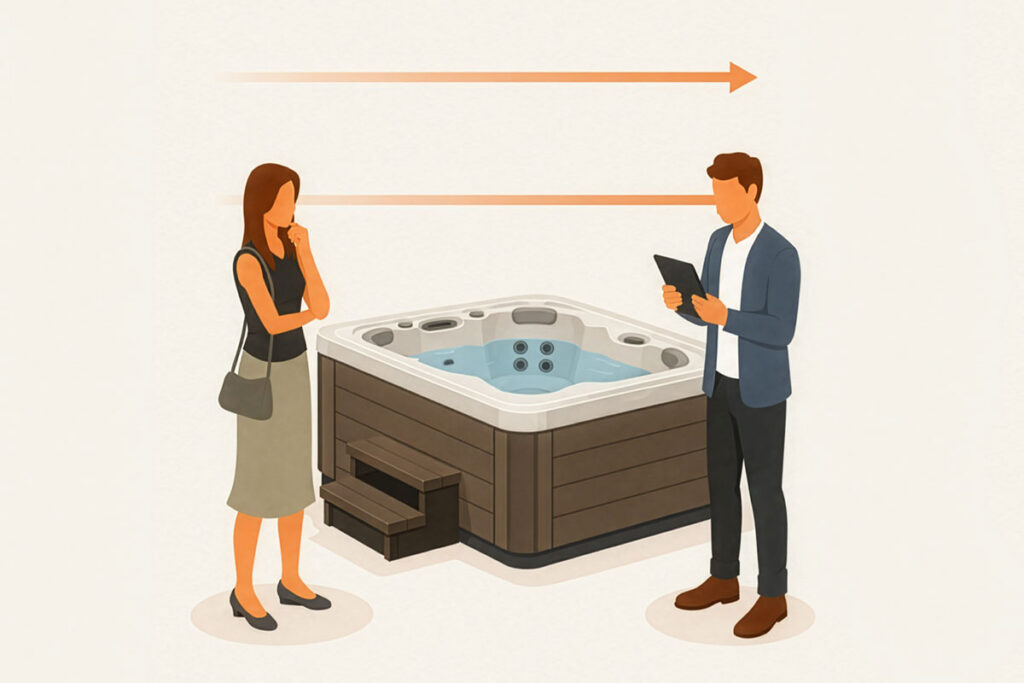
“Today’s buyer is significantly more informed before they ever walk into the showroom,” says Kathi Belcourt, director of sales and service at Canada-based Aqua-Tech. “Customers are researching brands, comparing features, reading reviews and consuming content long before making contact.”
These informed shoppers are also placing new weight on wellness, outdoor living, convenience and long-term value.
Research before retail
Thanks to YouTube, artificial intelligence, podcasts and a steady stream of online influencers, buyers arrive with a frame of reference they didn’t have a decade ago.
“In years past, people would come in and say, ‘I have no idea what a hot tub costs,’ ” says Max Blaser, general manager of Mountain Hot Tub with locations in Montana and Wyoming. “People would walk in and didn’t know if they were $3,000 or $30,000. Nowadays, people walk into the showroom and at least have an idea of the range of prices.”
As consumers become more informed, the sales process often starts further down the funnel. Blaser considers that a positive because it speeds things up.
Rather than introducing the category, retailers are increasingly validating what shoppers know, correcting misconceptions and helping them identify the right fit.
AI, in particular, is shaping how consumers research hot tubs.
“The hot tub industry has traditionally been shrouded in secrecy when it comes to pricing,” he says. “In the last six months, we’ve seen people coming in and reciting verbatim what is said in the AI overview in Google when you search, ‘What is the best hot tub?’ Whether that’s more informed or less informed, I guess it depends on who you ask.”
Customers are also increasingly getting information from nontraditional media, especially younger wellness-minded buyers.
“Rather than watching ‘NBC Nightly News,’ they’re listening to Joe Rogan,” Blaser says. “There are a lot of folks who are taking their lifestyle advice from the people they listen to or watch on TikTok, podcasts and YouTube, and there’s a lot of focus on health and wellness on those platforms.”
Wellness is winning
For years, hot tubs were marketed as aspirational purchases — something to own once you had the space, budget and lifestyle to justify it. That’s fading, retailers say.
“I think most of the demand is driven by wellness, stress relief, recovery and overall health-focused living,” says Laura Varnon, marketing and special projects manager of The Spa and Sauna Co. in Nevada. “People know that having a hot tub changes their lives. Hot tubs aren’t just a luxury item anymore.”
Her team notes most buyers are interested in hydrotherapy, ease of maintenance — especially with saltwater systems — and energy efficiency. Smart technology and aesthetics, she says, are “bonuses.”
That shift toward wellness and self-care is also reshaping buyer demographics, drawing in consumers who historically may not have considered hot tub ownership.
During a recent sales event, Mountain Hot Tub saw a noticeable increase in shoppers in their 30s and 40s, Blaser says.
“Traditionally, when we saw that shopper, it was like, ‘Oh, they’re going to hear the price and run,’ and now we’re getting younger hot tub buyers,” he says.
Blaser says the trend has become even more pronounced since the pandemic as consumers place greater emphasis on proactive health and recovery.
“We are getting people in [who are] asking about therapy and jets,” he says. “They’re wanting to do some preventative health things — that’s probably more prevalent on the sauna side — but even with hot tubs and cold plunge, we’re getting biohacking young couples wanting to be healthy and use this product for this as opposed to pure recreation.”
For many retailers, the wellness conversation extends beyond physical recovery. While hydrotherapy remains a significant selling point, buyers are also seeking ways to unplug.
Scott Clark, owner of The Spa and Sauna Co., often shares those firsthand benefits with customers.
“I can attest to the fact that on the days I use my hot tub, I feel better, less stressed, more creative and ready to take on the day compared to days without my hot tub,” he says.
The backyard getaway need remains
The home-improvement rise that began during the pandemic has cooled, but the desire to create meaningful moments at home remains. Consumers still prioritize experiences they can enjoy from the comfort of home, creating outdoor spaces designed for relaxation, connection and year-round enjoyment.
Blaser says rising travel costs may be reinforcing that trend.
“I think it’s back a bit with gas prices and flights increasing,” he says of destination backyards.
Consumers also see value in investing in amenities they can enjoy regardless of outside circumstances. Blaser says the pandemic and subsequent economic uncertainty reminded many homeowners that a well-designed backyard offers a dependable place to relax and spend time with family, even when travel plans change or budgets tighten.
Rather than viewing a hot tub as an occasional luxury purchase, many consumers are incorporating spas into a larger vision for their homes. For retailers, that shift creates an opportunity to position spas not simply as products, but as long-term investments.
Value means more than price
Affordability still remains a part of the conversation for many retailers as shoppers weigh financing, operating costs, reliability and service alongside the sticker price.
More customers are asking what they can expect from the product — and the retailer — after the sale.
“Customers are becoming increasingly value-conscious, but value does not necessarily mean lowest price,” Belcourt says. “It means reliability, service, efficiency and confidence in the company behind the product.”
Much of that equation now starts with running costs.
“Energy efficiency and ease of ownership are major priorities today,” Belcourt says.
Busy customers — especially those with vacation or high-value homes — also expect the spa to look after itself, through automated water care, chemical dispensers and UV or ozone systems.
“Everyday life is so busy for our customers; they do not want to spend lots of time figuring out how to use and take care of their hot tub,” Clark says. “If I can turn on my toaster with a phone app and adjust my thermostat for my house while across town, the expectation is that these things need to be part of the hot tub, too.”
What big-box stores can’t deliver
When a spa is a few clicks away, a local retailer’s edge isn’t always the product — it’s everything around it.
“On the delivery side of things, I’m sure a lot of brick-and-mortar retailers were terrified when all these various online retailers started selling hot tubs,” Blaser says. “But the number of folks we convert every year who have had a hot tub drop in their driveway with zero ability to move it or wire it or do anything else is pretty astounding.”
That’s where a local dealer earns the sale.
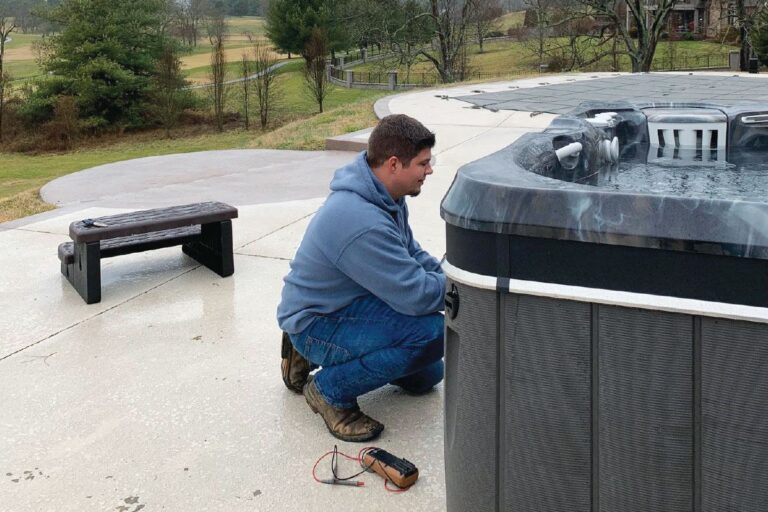
“[Local dealers can] get the spa where you want it, set up a lifter, wire the tub, get it filled and do an orientation,” Blaser says. “That’s the difference between a happy hot tub owner who will probably own one the rest of their life and the one who tells all their friends hot tubs are a nightmare and they’d never own one again.”
The advantage extends past delivery day; the retailers who simplify ownership keep the customer.
“The companies that remove friction tend to build the strongest long-term customer relationships,” Belcourt says. Much of that friction is water care, where buyers want guidance and ongoing support, so the experience feels manageable, she says.
Some buyers would rather hand off maintenance entirely.
“Many of our customers also prefer that we take care of the periodic tasks like cleaning filters, conditioning the spa cover and draining and refilling the spa,” Clark says. “I can wash and detail my own car, but the detail shop doing it for me has an appeal. Many of our customers feel similarly.”
Looking forward to buyer trends
The buyer’s evolution isn’t over. As wellness priorities shift and purchasing habits change, retailers will need to keep adapting alongside their customers.
Varnon believes more purchases will move online, and the customer base will continue trending younger as wellness becomes a lifelong priority.
“I think over time hot tubs will be considered more of a necessity for healthy living,” she says.
For dealers, the challenge will be balancing digital convenience with the personalized service that builds long-term loyalty. While the buying process evolves, the core motivation remains the same: improving quality of life. What has changed is the level of experience consumers expect along the way.
“Today’s customer is looking for more than a product,” Belcourt says. “They’re looking for an experience and a trusted long-term relationship with the retailer. In our industry, customers are investing in how they want to feel at home. The retailers who understand that emotional component — while still delivering strong service and reliability — are the ones who will continue to grow.”