Don’t Change the Channel … or Maybe, Do!
Exploring new marketing avenues
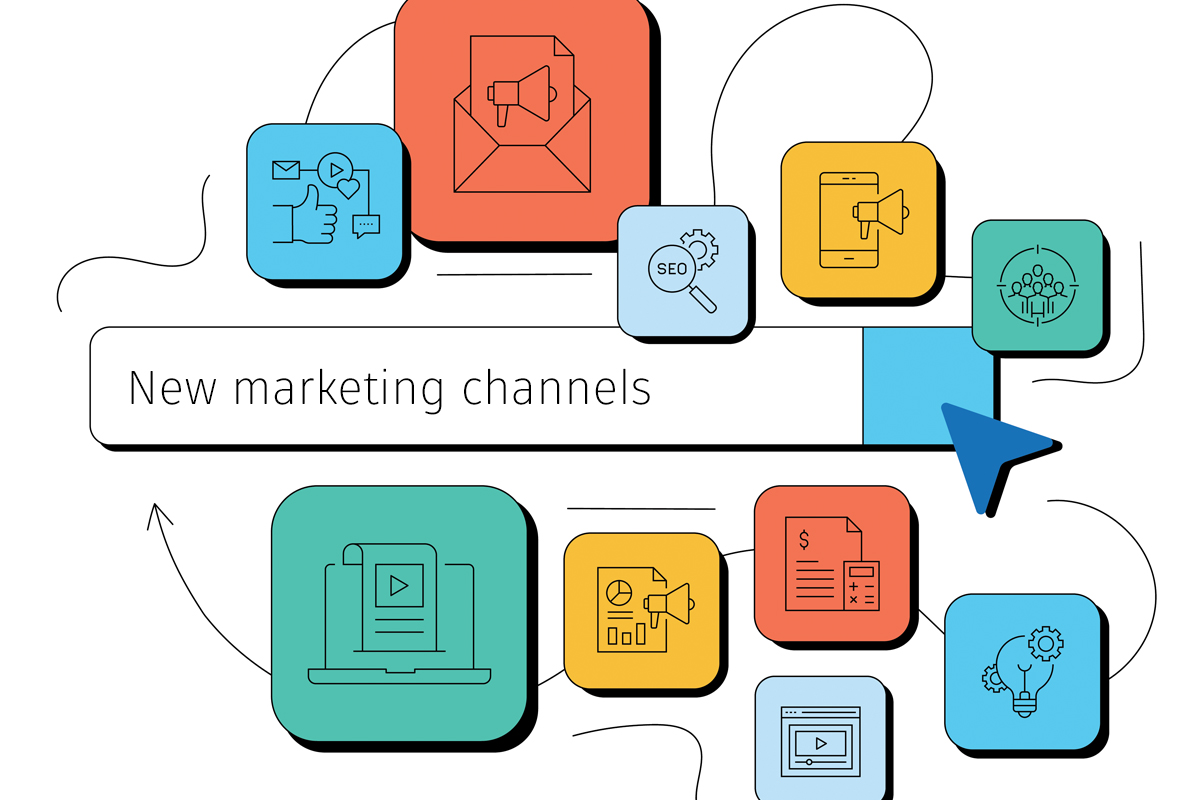
With new marketing channels popping up constantly — from trending social platforms to podcasts and local influencers — it’s hard to know which are worth trying. Are these tools actually a good fit for hot tub businesses?
Both Kristan Hart, founder and CEO of Profit Roadmaps, and Radostina Stoycheva, director of performance marketing at Compass Digital, believe the answer is yes — but with thoughtful strategy and clear goals.
“Digital marketing is always changing,” Hart says. “It’s a good idea to keep your toe in the water — pun intended — and be aware of what’s out there and what could benefit your business.”
Start with the why
Hart says the first step most businesses skip is determining why they’re testing something. Are you pursuing a new target audience? Improving SEO? Trying to drive more leads?
Some of Hart’s clients are exploring YouTube promotion but find the targeting options limiting for local businesses. She’s also researching YouTube TV and connected TV, which can be expensive options.
Hart notes many small businesses feel pressured to join trendy platforms without understanding the purpose.
“I’ve talked to some people and they’re like, ‘We have to be on TikTok,’ ” she says. “And I’m like, ‘OK, why?’ ”
Lacking clear goals can waste valuable resources, she says.
Stoycheva, however, says hypertargeting on newer platforms has been extremely successful for her clients — targeting by income, geography or specific wellness interests.
Creating content for video-heavy channels
For YouTube and CTV (or OTT), it’s best to have more polished videos than what would run on TikTok.
CTV v. OTT Explained
CTV (Connected TV): The device delivering the content (smart TV, streaming stick, gaming console).
OTT (Over-the-top): The content delivery platforms (Netflix, Disney+, Hulu).
“The first seven seconds are when you really have to catch the audience,” Stoycheva says.
Videos with voiceovers get significantly higher conversions, she adds — around 75% more — and artificial intelligence tools make professional-sounding voiceovers easy to produce.
Dealers also use virtual reality showroom tours to help customers visualize products.
Why Reddit suddenly matters
Hart is especially intrigued by Reddit because of its new relationship with Google.
“Reddit is a platform every business needs to be aware of,” she says. “Reddit is helping power Google’s AI systems. And in exchange, Reddit now appears more prominently in Google searches.”
Being part of relevant Reddit threads, she says, could influence what AI chatbots and search results surface about your brand.
Radio works, TV is harder
Hart’s clients have seen strong return on investment from local radio — the classic AM stations that are plugged into the community.
Streaming TV, on the other hand, is quite expensive, making it impractical for most dealers.
Stoycheva adds that connected TV succeeds when targeting is precise — and that QR codes are essential.
“People are on their phone watching their show. They’re going to scan those QR codes more than they’re going to click on something,” she says.
Proceed carefully with podcasts
Stoycheva says most dealers avoid podcasting because it takes the right kind of personality — someone who enjoys being on stage and talking at length.
“You need someone who wants to be a star for a podcast. That’s going to be hard to find unless it’s your head salesperson,” she says.
If a company does try podcast ads, Stoycheva stresses the need for tracking tools like URL codes or gated content. Video of a podcast can also be repurposed for other content.
Budgeting for new platforms
Hart urges businesses to test new channels only after core platforms are fully funded — especially Google Search, which captures high-intent traffic. Allocating 10% or less of the marketing budget to experiments is her standard.
“Marketing should not be hands off,” Hart adds. “It is not a set-it-and-forget-it type of activity for any business.”
Stoycheva’s number is slightly higher: “It can be anywhere between 5%-10%, but I would say up to 15 because you really want to find your high-ROI channel,” she says.
She also warns that attribution is one of the biggest challenges with new channels and recommends CRMs and UTM tracking tools to avoid “throwing money at a wall.”
Brand voice comes first
Rather than tailoring content to each platform’s personality, Hart focuses on brand consistency.
She uses the STAR framework — specific, time-bound, action-oriented and realistic — to evaluate goals and decide what to turn off.
Stoycheva adds that creative strain is a real challenge.
“Many teams don’t have the creative ability to make their own videos, but this video I just recorded on my phone is doing better than this video we spent $2,000 on,” she says.
Sometimes the simplest creative performs best.
AI, AR and demand generation
Hart is focusing on demand generation, including getting AI programs like ChatGPT to include a dealer’s brand when answering consumer questions.
“AI has changed between now and the time this article publishes,” Hart says. “And it’s going to change again.”
Stoycheva agrees and is exploring personalized hot tub recommendations powered by AI and augmented reality tools that help homeowners visualize installations.
“AR is going to become more important because people are nervous to start a project that’s going to dig up their whole backyard,” she says.
Both experts say the next one to three years will bring seismic shifts in how customers discover, research and interact with hot tub brands — making experimentation essential and strategy nonnegotiable.